
For SMEs, resilience in 2026 often comes down to one thing: visibility. You can be profitable on paper and still run into a cash crunch if receivables slip, costs spike, or inventory ties up liquidity. A solid cash flow forecast helps you spot problems early, make confident decisions, and protect payroll and operations.
This is exactly where partners like XMC Asia add value—helping SMEs build forecasting routines that are simple enough to maintain weekly and strong enough to guide real decisions.
Key Benefits

Prevent cash surprises (and stop “reactive firefighting”)
A cash flow forecast shows your expected cash position over the coming weeks/months, so you can anticipate shortfalls and act early—before you’re forced into rushed borrowing or delayed payments.
Practical actions it enables:
- Adjust payment terms or collections strategy
- Reschedule discretionary spend
- Plan inventory purchases more safely
- Time tax or supplier payments intelligently

Better working capital decisions (AR, AP, and inventory)
Most SME cash issues are working-capital issues: slow receivables, uncontrolled payables timing, and inventory overbuying. A forecast turns these into manageable levers rather than stress points.
What to bake into your model:
- Top customers by collection behavior (on-time vs late)
- Supplier payment timing (actual payment behavior, not just “terms”)
- Inventory purchase cadence and seasonal peaks
(Inventory is a common driver of cash pressure; forecasting should explicitly account for it.)

Stronger lender and investor confidence
Banks and investors want to see that you understand your cash cycle and can manage risk. The World Bank highlights SMEs’ constraints and sensitivity around cash flow and financing access—clear forecasting reduces perceived risk.

A clearer path to growth
Growth often consumes cash: higher payroll, bigger inventory buys, longer AR cycles. Forecasting lets SMEs expand without accidentally starving operations.
This matters even more as finance leaders continue prioritizing efficiency and cash discipline going into 2026.

Conclusion
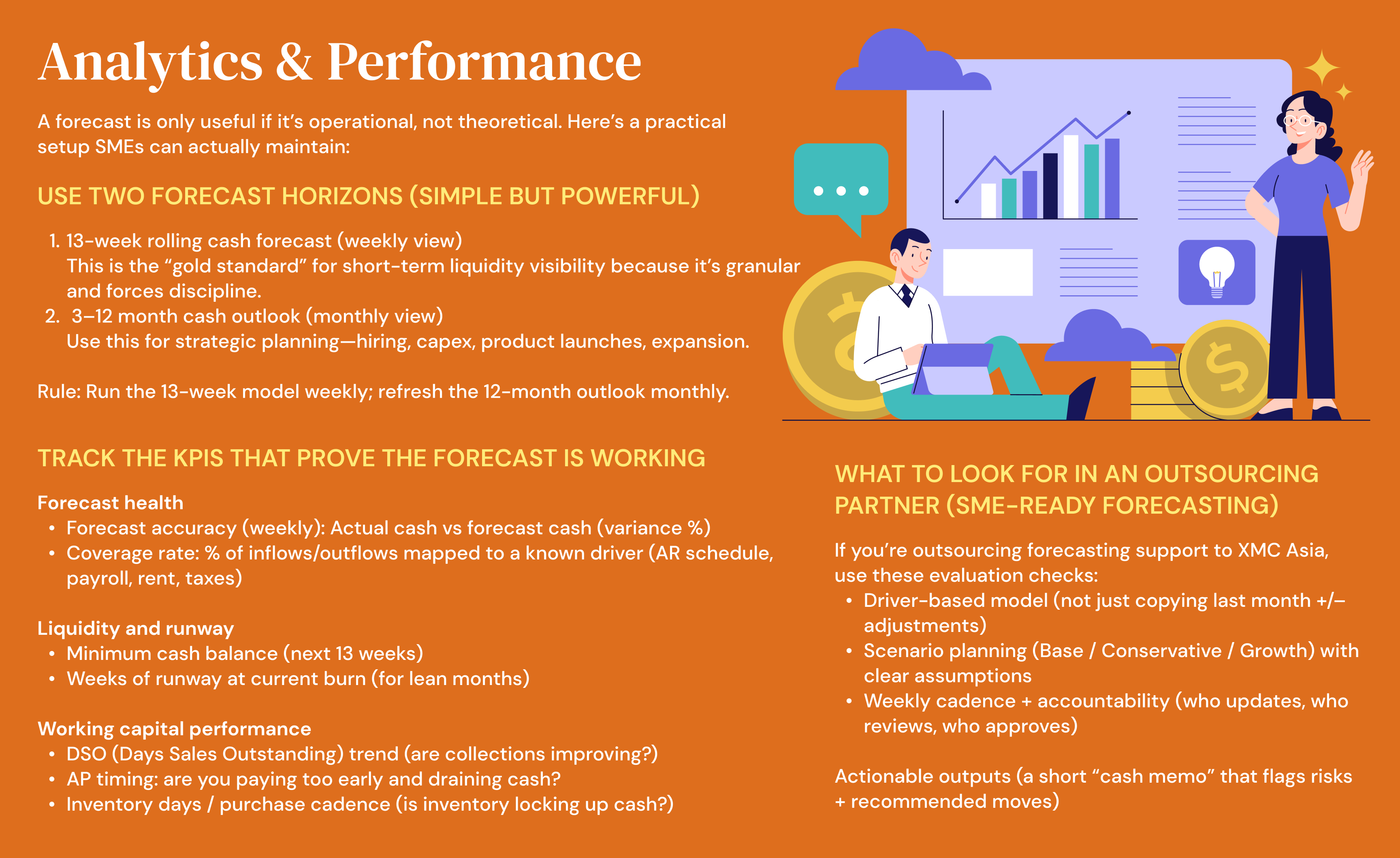
Cash flow forecasting isn’t about fancy spreadsheets—it’s about control. In 2026, SMEs stay resilient by building a forecasting rhythm that is frequent, realistic, and tied to real business drivers (AR, AP, payroll, inventory).
With the right structure—and support from a finance partner like XMC Asia—your cash forecast becomes a weekly decision tool: protecting operations, enabling growth, and reducing stress for leadership.
References
- ICAEW — Managing your cash flow
- ICAEW — Managing and forecasting cash
- ICAEW — Cash flow forecasts and inventory
- Deloitte — Finance Trends 2026
- World Bank — Small and Medium Enterprises (SMEs) Finance