
Many businesses only think about audits when they’re already scheduled—but by then, gaps in documentation and weak controls can create unnecessary stress, delays, and even compliance risks.
Being audit-ready year-round is not about overcomplicating accounting. It’s about having the right controls, documentation discipline, and systemized workflows in place. Organizations working with structured finance partners like XMC Asia are increasingly adopting proactive audit-readiness frameworks to reduce risk and improve transparency.
Key Benefits of Audit-Ready Accounting

Faster Audit Completion
Well-organized records significantly reduce auditor fieldwork time and follow-up requests.

Lower Compliance Risk
Strong documentation reduces the likelihood of penalties, misstatements, or regulatory issues.

Improved Financial Accuracy
Regular reconciliation and control checks ensure financial statements reflect real performance.

Stronger Investor and Stakeholder Confidence
Clean audit trails improve trust among investors, lenders, and partners.

Scalable Finance Operations
With structured support from XMC Asia, businesses can maintain audit readiness even as transaction volume grows.

Conclusion
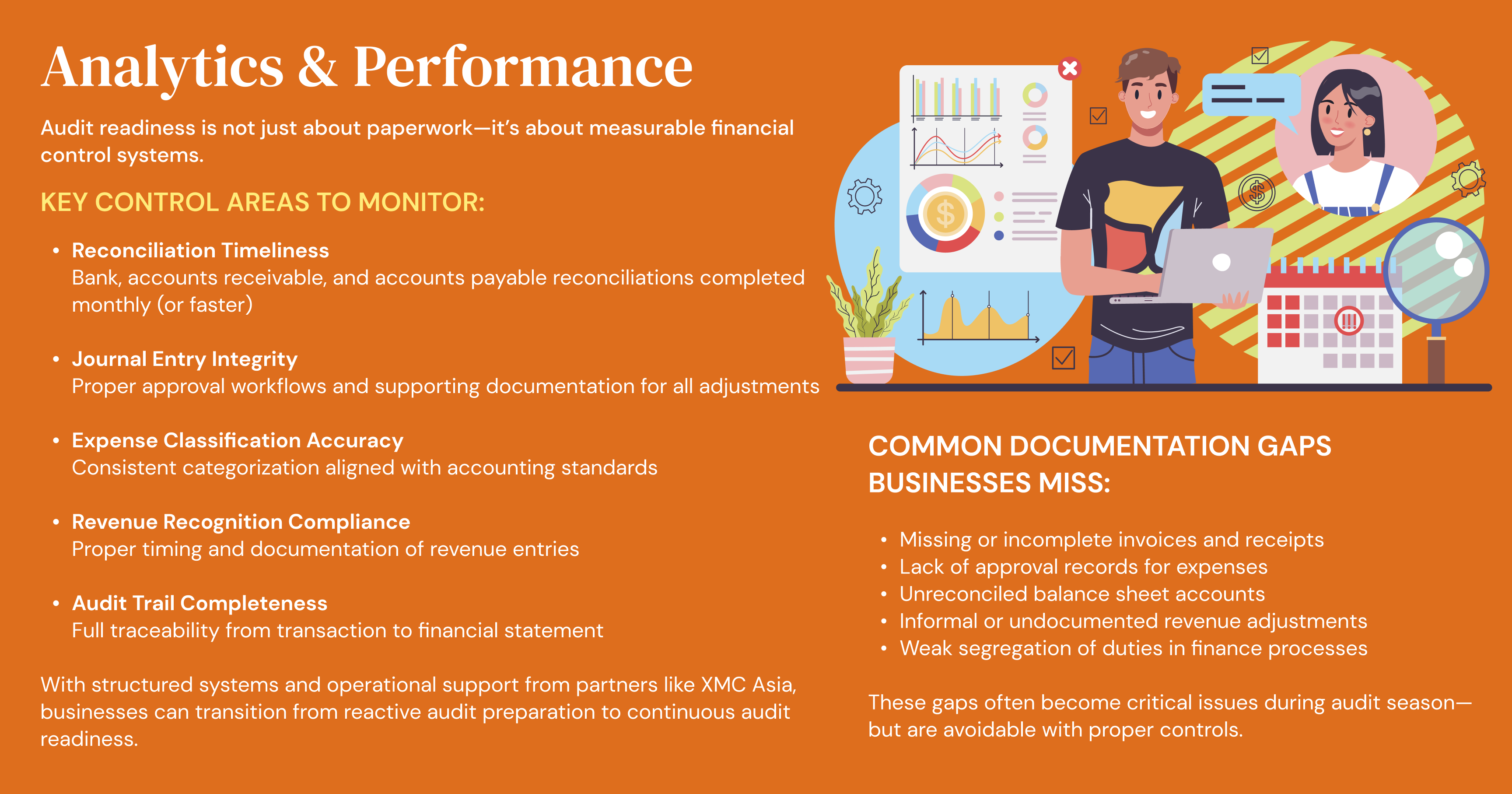
Audit readiness is not a once-a-year task—it is a continuous discipline built into everyday accounting operations.
Businesses that prioritize strong internal controls, consistent documentation, and structured financial workflows reduce audit friction and improve overall financial integrity.
With the right systems in place—and operational support from providers like XMC Asia—companies can move from “audit preparation mode” to a state of constant financial readiness.
References
- Investopedia. Audit: Meaning in Finance and Accounting and 3 Main Types
- PwC. Audit and Assurance