
Expanding into international markets is a major growth milestone—but it also introduces a new layer of accounting complexity and compliance risk. Different tax regimes, reporting standards, payroll rules, and entity structures can quickly overwhelm unprepared finance teams.
Before entering new markets, businesses need a structured accounting and compliance readiness framework. Many organizations partner with providers like XMC Asia to ensure financial operations remain compliant, scalable, and audit-ready across borders.
Key Benefits of International Expansion Readiness

Faster Market Entry
Clear financial and compliance planning reduces delays in entity setup and operations launch.

Reduced Regulatory Risk
Proper adherence to local tax laws, labor regulations, and reporting standards avoids penalties.

Consistent Financial Reporting
Standardized accounting frameworks ensure consolidated financial visibility across countries.

Stronger Investor Confidence
Transparent, compliant international operations improve credibility with stakeholders.

Scalable Global Operations
With structured support from XMC Asia, businesses can scale into multiple regions without duplicating finance infrastructure.
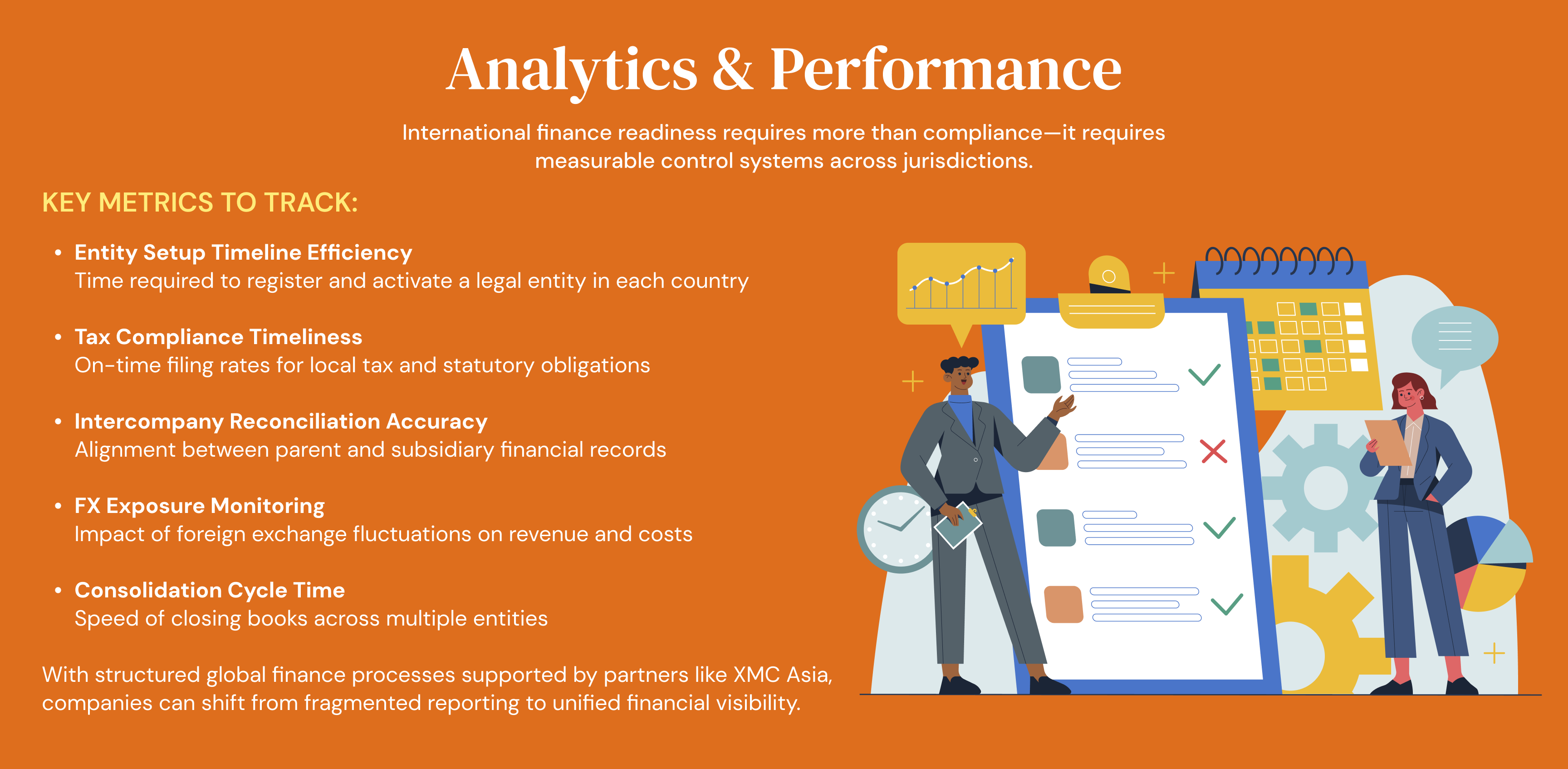
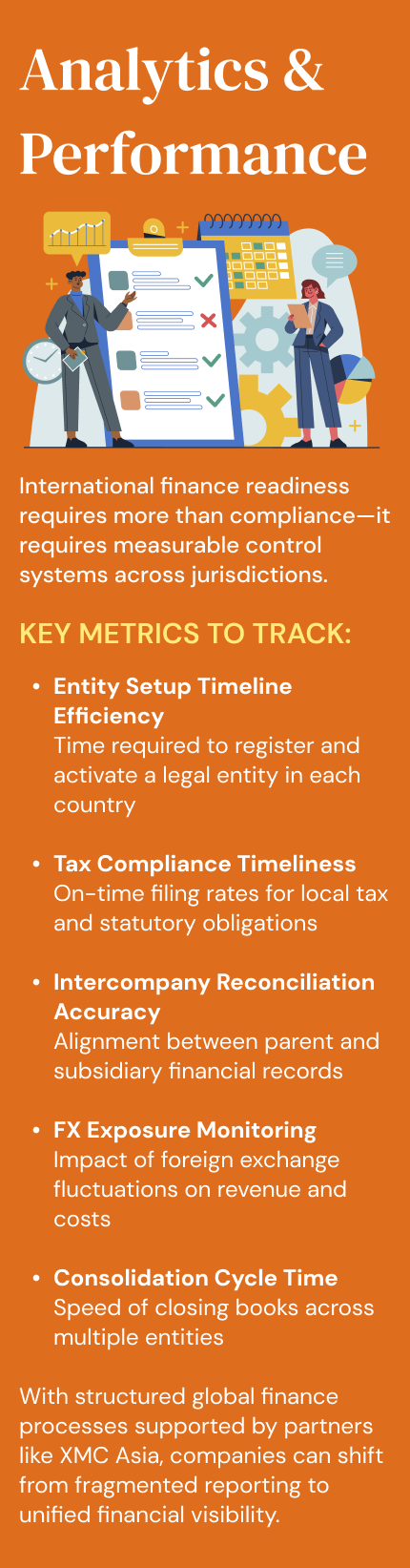
International Accounting & Compliance Checklist
1. Entity & Legal Structure
Proper legal entity established in target country
Clear ownership structure defined
Local registration and licensing completed2. Tax Compliance Framework
Understanding of corporate tax rates and obligations
VAT/GST/sales tax registration where required
Withholding tax rules identified3. Accounting Standards Alignment
GAAP or IFRS alignment strategy defined
Local statutory reporting requirements mapped
Chart of accounts localized where necessary4. Payroll & Labor Compliance
Local employment law review completed
Statutory benefits and contributions identified
Payroll system adapted for local requirements
5. Banking & Cash Management
Local bank accounts established
Foreign exchange and repatriation rules understood
Payment processing systems configured6. Internal Controls & Audit Readiness
Approval workflows adapted for multi-entity structure
Documentation standards standardized globally
Audit trail systems implemented7. Reporting & Consolidation
Monthly consolidation process defined
Intercompany transaction policies established
Reporting timelines standardized across regions
Conclusion
International expansion is not just a business growth strategy—it is a financial systems challenge. Without proper accounting and compliance preparation, global growth can quickly become fragmented and risky.
Companies that invest early in structured finance frameworks, standardized controls, and compliance readiness are far better positioned to scale successfully.
With the right global finance infrastructure—and operational support from providers like XMC Asia—businesses can expand confidently while maintaining full financial control and compliance across borders.