
In an increasingly complex financial environment, risk management in finance is no longer optional—it is a core operational requirement. Businesses that fail to implement proper financial controls face heightened exposure to fraud, reporting errors, regulatory penalties, and operational inefficiencies.
For scaling organizations working with partners like XMC Asia, strong financial control systems are essential to maintain accuracy, transparency, and trust across all financial operations.
What Is Financial Risk Management?
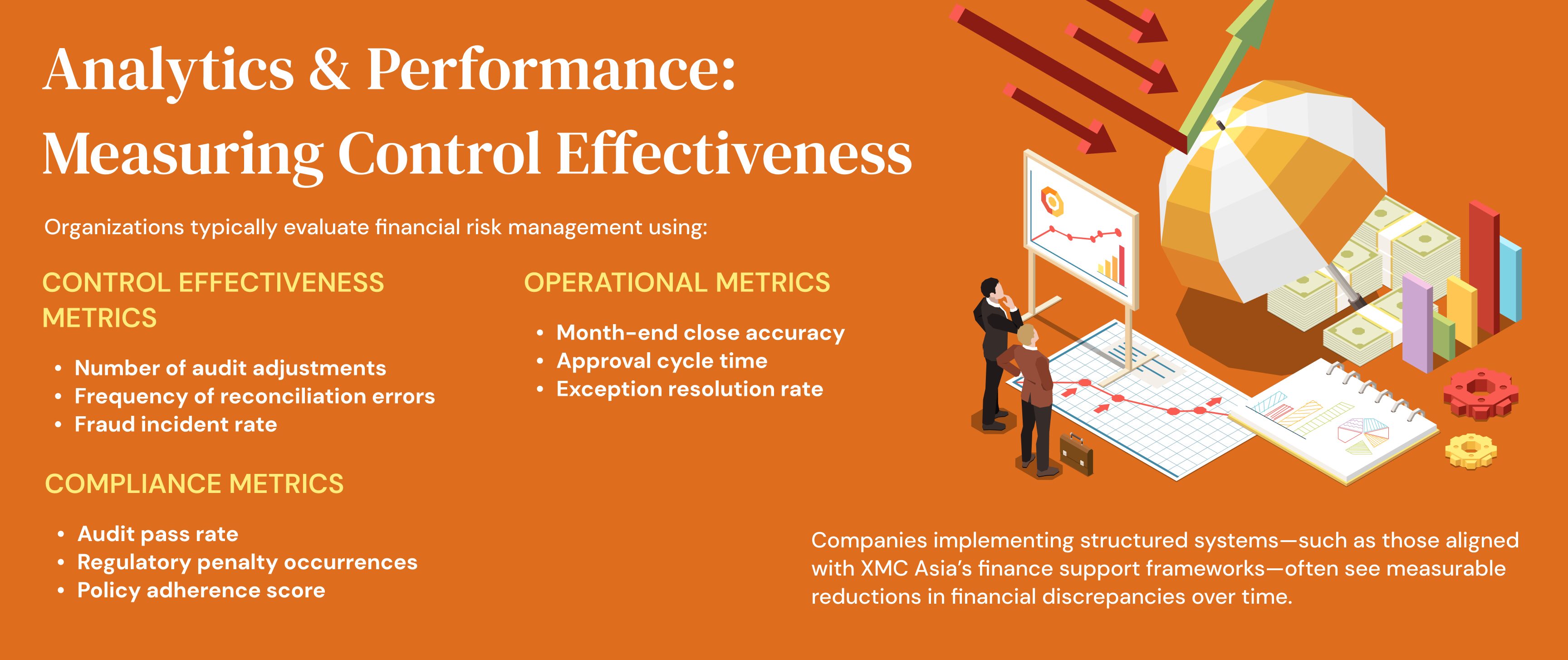
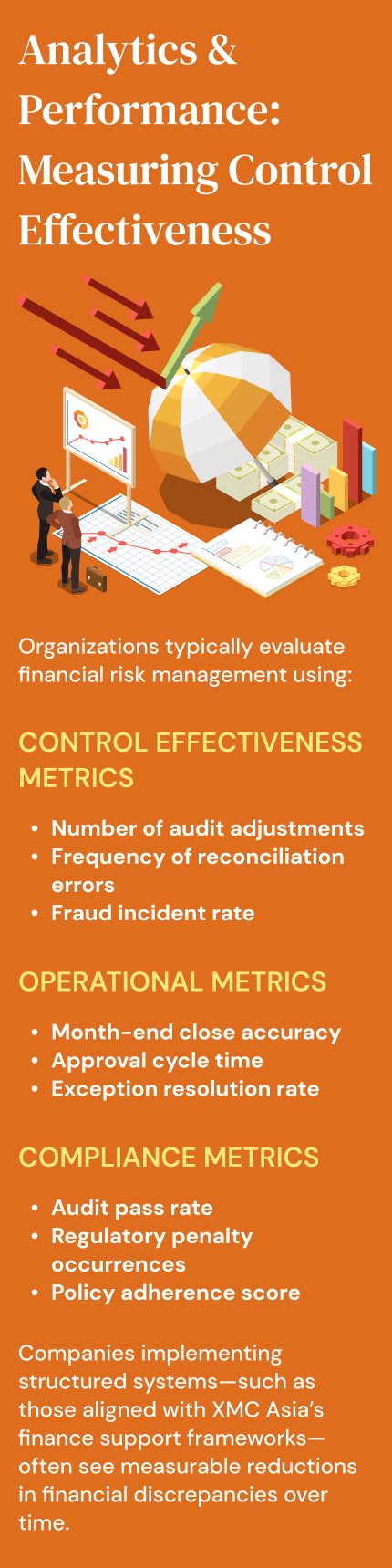
Financial risk management is the process of identifying, assessing, and controlling risks that could negatively impact a company’s financial health.
These risks typically include:
- Fraud and embezzlement
- Accounting errors
- Misreporting of financial data
- Compliance violations
- Operational inefficiencies
The goal is to ensure that financial data remains accurate, complete, and secure.
Key Types of Financial Risks
1. Operational Risk
Errors caused by systems, processes, or human mistakes in daily accounting activities.
2. Fraud Risk
Intentional manipulation of financial records, including theft, invoice fraud, or payroll fraud.
3. Compliance Risk
Failure to follow tax laws, accounting standards, or regulatory requirements.
4. Reporting Risk
Inaccurate financial statements that lead to poor business decisions or audit issues.
5. Liquidity Risk
Inability to meet short-term financial obligations due to poor cash management.
Core Financial Controls That Prevent Fraud and Errors

Segregation of Duties (SoD)
No single employee should control an entire financial process.
For example:
- One person records transactions
- Another approves payments
- A third reconciles accounts
This reduces the risk of internal fraud.

Bank Reconciliations
Regular reconciliation ensures:
- Internal records match bank statements
- Missing or duplicate transactions are identified early
- Cash flow accuracy is maintained
This is one of the most critical controls in any finance function.

Approval Hierarchies
All financial transactions should follow structured approval workflows:
- Expense approvals
- Vendor payments
- Payroll adjustments
This ensures accountability at every level.

Internal Audits
Periodic internal reviews help detect:
- Accounting inconsistencies
- Fraud patterns
- Policy violations
Internal audits act as an early warning system before external audits occur.

Access Control and Role Permissions
Restrict system access based on job roles:
- Finance staff access accounting systems
- Managers approve transactions
- Executives view reports
This limits unauthorized changes to financial data.

Automated Accounting Systems
Automation reduces human error in:
- Data entry
- Reconciliation
- Report generation
With structured financial frameworks supported by XMC Asia, businesses often improve accuracy and reduce manual workload significantly.
Key Benefits of Strong Financial Risk Management
Fraud Prevention
Reduces opportunities for internal and external financial misconduct.
Improved Accuracy
Ensures financial statements reflect real business performance.
Regulatory Compliance
Helps meet tax, audit, and reporting requirements.
Better Decision-Making
Reliable financial data leads to better strategic decisions.
Operational Efficiency
Minimizes rework, corrections, and financial discrepancies.
Common Weaknesses in Financial Controls
- Lack of segregation of duties
- Manual spreadsheet-based accounting
- Weak approval workflows
- Infrequent reconciliation cycles
- Limited audit oversight
These gaps often create opportunities for fraud or unnoticed errors.
Conclusion
Financial risk management is not just about preventing fraud—it is about building a trustworthy financial system that supports sustainable growth.
Businesses that implement strong controls benefit from:
- Higher financial accuracy
- Reduced fraud risk
- Stronger compliance
- Better operational discipline
For growing companies working with partners like XMC Asia, robust financial controls create the foundation for scalable, audit-ready, and resilient financial operations.