
In 2026, expense control is no longer just about cutting costs—it’s about protecting profitability while enabling growth. Businesses today operate in a fast-moving environment where decentralized teams, digital spending, and subscription-based tools can quickly drive costs out of control.
To stay competitive, organizations need smart, policy-driven expense management systems backed by automation, real-time visibility, and strong financial governance. With support from providers like XMC Asia, companies can build scalable expense frameworks that balance control with flexibility.
Key Benefits of Smart Expense Control Policies

Improved Profit Margins
Controlling unnecessary or redundant expenses directly protects bottom-line performance.

Real-Time Spend Visibility
Modern systems provide instant insights into where money is going—across departments, teams, and tools.

Reduced Leakage and Fraud Risk
Clear policies and automated controls help prevent unauthorized or duplicate spending.

Faster Approvals and Reimbursements
Streamlined workflows reduce delays while maintaining proper oversight.

Scalable Financial Governance
With structured support from XMC Asia, businesses can enforce consistent policies even as they grow across regions or teams.
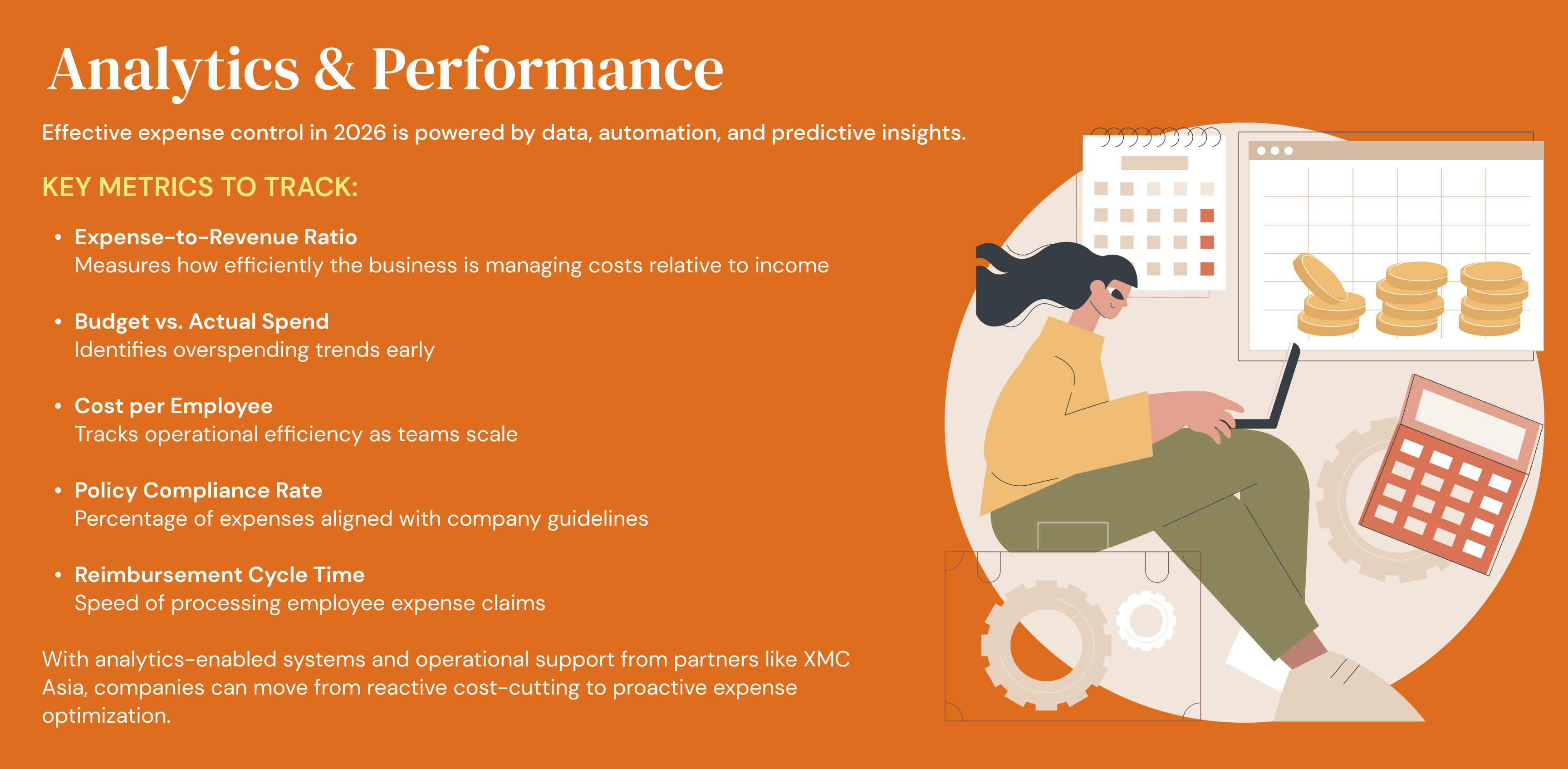
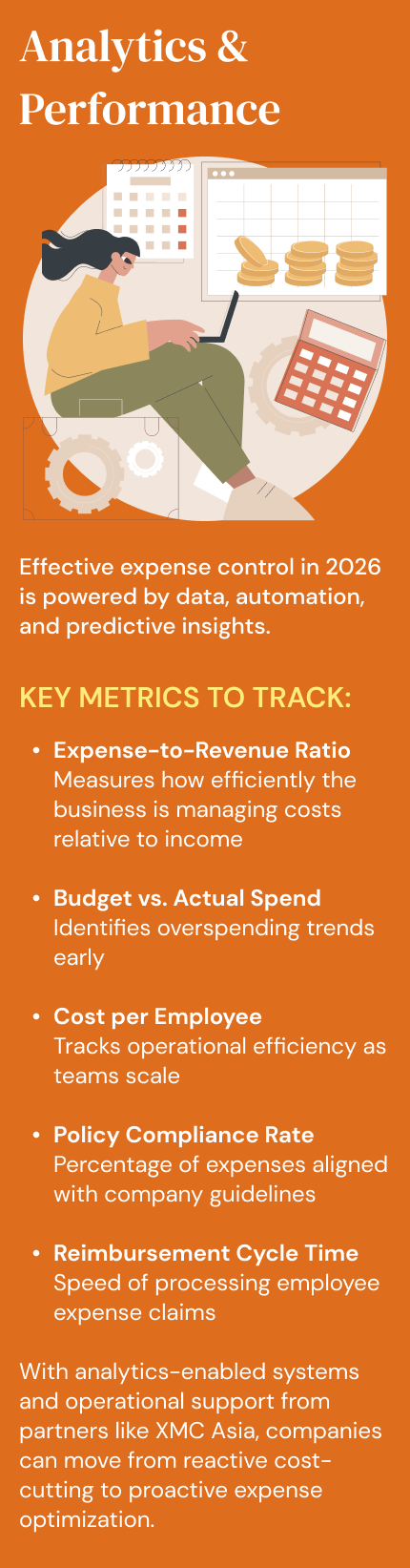
Smart Expense Policies for 2026
Clear Expense Categories and Limits
Define spending thresholds by role, department, and expense type (travel, software, meals, etc.).
Pre-Approval Workflows
Require approvals for high-value or non-standard expenses before they occur—not after.
Subscription and SaaS Management
Track and regularly audit recurring software expenses to eliminate unused or duplicate tools.
Automated Expense Capture
Use digital tools for receipt scanning, categorization, and real-time reporting.
Corporate Card Controls
Implement spending limits, merchant restrictions, and real-time monitoring.
Regular Expense Audits
Conduct periodic reviews to identify inefficiencies, fraud risks, or policy gaps.
Employee Policy Education
Ensure teams understand what is allowed, reimbursable, and expected—reducing accidental violations.
Conclusion
Expense control in 2026 is not about restriction—it’s about precision. The most successful organizations are those that combine clear policies, smart automation, and real-time analytics to manage spending effectively.
By building structured expense frameworks and leveraging operational expertise from providers like XMC Asia, businesses can protect profitability while still enabling growth and innovation.
References
- Investopedia. Expense: Definition, Types, and How It Is Recorded
- McKinsey. Insights on Operations