
The accounting industry is undergoing a significant shift. Traditional hourly billing and project fees are increasingly being replaced by subscription-based accounting services — a model long familiar in SaaS and media but now gaining real traction among accounting firms worldwide. In this evolving landscape, firms that embrace this model — including forward-thinking providers like XMC Asia — are discovering new ways to grow revenue, deepen client relationships, and future-proof their business.
What Is Subscription Accounting?
Subscription accounting means offering your clients ongoing accounting, tax, bookkeeping, and advisory services for a recurring monthly or annual fee instead of charging per task or hourly. Think of it like a membership: clients pay a predictable amount and receive continuous value in return.
This trend reflects a broader shift in how professional services are packaged — moving from one-off engagements to ongoing partnerships.

Key Benefits of Subscription Accounting

Stable & Predictable Revenue
One of the biggest advantages is predictable cash flow. With subscription fees collected monthly or annually, firms can anticipate income more accurately, facilitating budgeting and investment in growth or technology.
This predictability reduces financial stress and minimizes the peaks and valleys associated with seasonal billing.

Stronger Long-Term Client Relationships
Subscription models foster ongoing engagement because clients interact with your firm year-round rather than just at tax season. This leads to deeper trust, higher retention, and often more referrals — an advantage embraced by innovative firms like XMC Asia.

Enhanced Client Value & Proactivity
Rather than waiting for clients to request help, accounting firms can offer continuous guidance — from tax planning to financial strategy — adding real value beyond compliance work.

Simplified Billing & Client Budgeting
Subscription pricing eliminates surprise invoices and makes costs predictable for clients. Clients can budget for accounting services like any other monthly business expense, improving satisfaction and reducing payment friction.

Better Operational Efficiency
Recurring service models pair well with automation tools and cloud platforms that streamline workflows, reduce manual data entry, and improve report accuracy — meaning your team spends less time on chores and more on strategic tasks.
Conclusion
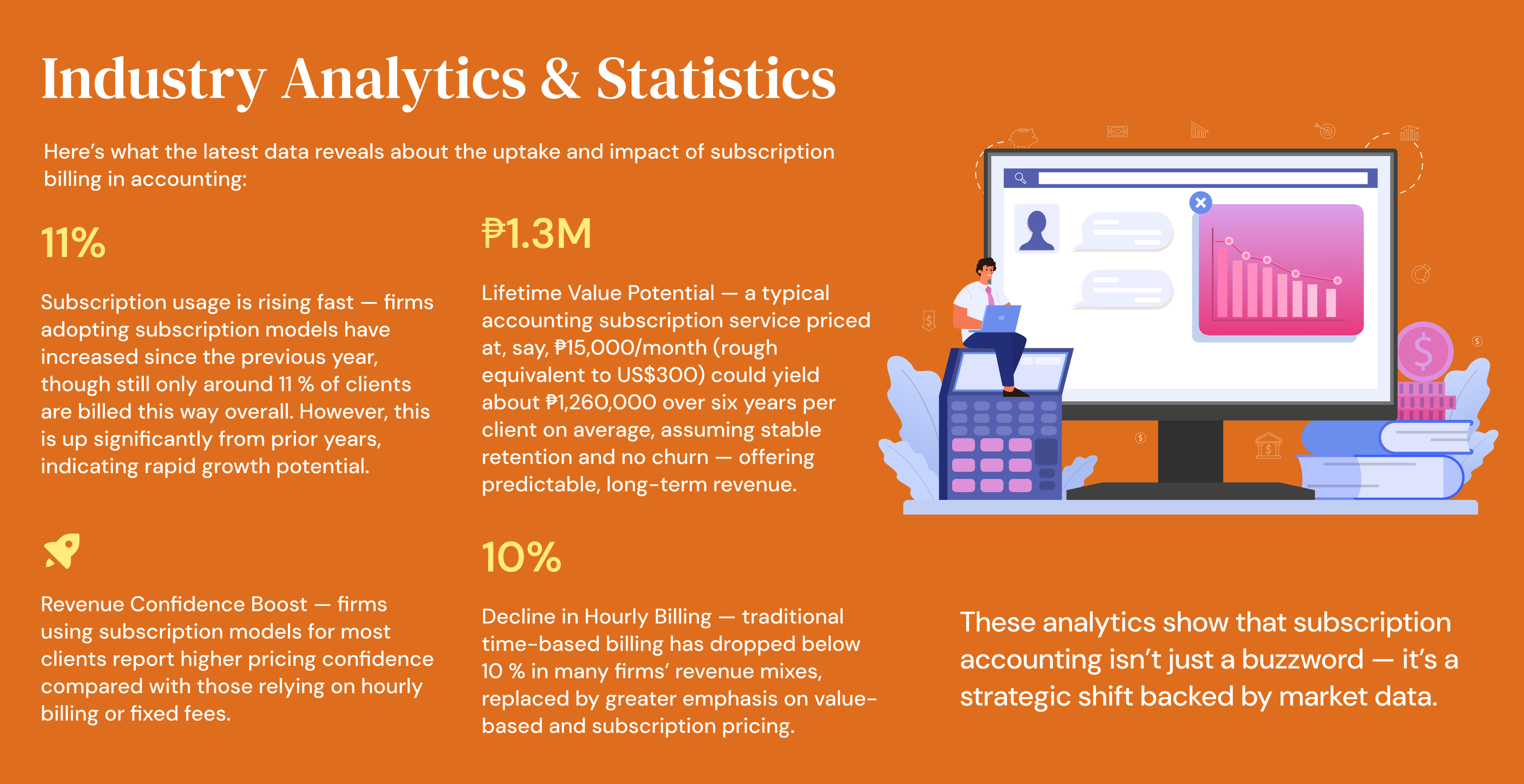
The rise of subscription accounting is more than a trend — it’s a strategic evolution in how accounting firms deliver and monetize services. With strong analytics showing increased pricing confidence and long-term value, firms that embrace this model — including innovators like XMC Asia — are positioning themselves for sustainable growth, stronger client relationships, and enhanced operational efficiency.
If your firm is looking for predictable revenue, deeper engagements, and a competitive edge, subscription accounting might just be the right path forward. As the industry continues to shift, those who adapt early will be best positioned to thrive.
References
- Vintti. Key Subscription Software for Accountants
- PSTAP. Should Your PA Accounting Firm Utilize a Subscription or Membership Model for Clients?
- Intuit Accountants. Shifting to a membership-based subscription model
- Build Your Firm. Why Subscription Plans Are the Future of Accounting
- AIQ Labs. Solve Subscription Chaos in Accounting Firms with Custom AI