
One of the most misunderstood realities in business finance is this: profit does not guarantee cash availability. Many growing companies appear profitable on paper but still struggle to pay suppliers, employees, or operational expenses.
For scaling businesses—especially those working with structured financial systems like XMC Asia—understanding the difference between cash flow and profit is essential for survival and growth.
Profit vs Cash Flow: The Core Difference
Profit (Net Income)
Profit is what remains after subtracting all expenses from revenue.
It reflects:
- Revenue earned
- Minus costs and expenses
- Recorded under accounting rules (accrual basis in most cases)
👉 Profit answers: “Is the business financially successful on paper?”
Cash Flow
Cash flow tracks the actual movement of money in and out of the business.
It reflects:
- Money received from customers
- Payments made to suppliers, staff, and expenses
- Timing of real cash movement
👉 Cash flow answers: “Do we actually have money in the bank?”
Why Profit and Cash Flow Don’t Match
Even profitable companies can experience cash shortages due to timing and accounting differences.
1. Delayed Customer Payments (Accounts Receivable)
You may record revenue today, but cash arrives weeks or months later.
2. Upfront Expenses
Businesses often pay for:
- Inventory
- Salaries
- Rent
- Software subscriptions
…before revenue is fully collected.
3. Loan Repayments and Financing Costs
Debt obligations reduce cash but may not immediately affect profit.
4. Capital Investments
Equipment or expansion costs reduce cash immediately but are depreciated over time in profit calculations.
5. Accounting Timing Differences
Profit uses accrual accounting—meaning income is recorded when earned, not when cash is received.
Example: Profit vs Cash Flow Gap
| Scenario | Profit Impact | Cash Impact |
|---|---|---|
Client invoice issued ($50,000) |
+$50,000 profit |
$0 cash (not paid yet) |
Office rent paid ($10,000) |
-$10,000 expense |
-$10,000 cash |
Equipment purchase ($20,000) |
Depreciated over time |
-$20,000 cash |
👉 Result: You may show profit but still have negative cash flow.
Key Signs Your Business Has a Cash Flow Problem
1. Profit looks healthy, but bank balance is low
2. You rely on incoming payments to cover urgent expenses
3. Payroll timing feels stressful every month
4. Supplier payments are frequently delayed
5. You constantly monitor cash instead of growth
These are early warning signs of liquidity stress.
How to Manage Profit and Cash Flow Together

Improve Receivables Collection
- Shorten payment terms
- Follow up on overdue invoices
- Offer early payment incentives

Forecast Cash Flow Regularly
A 30–90 day forecast helps anticipate shortages before they happen.

Separate Profit Thinking from Cash Planning
Profit is strategic; cash flow is operational survival.

Align Expenses With Cash Timing
Avoid large upfront commitments without matching inflows.

Use Structured Financial Systems
With frameworks supported by partners like XMC Asia, businesses can integrate:
- Real-time reporting
- Cash flow dashboards
- Automated reconciliation
This reduces blind spots between profit and liquidity.
Key Benefits of Understanding the Difference
Better Financial Control
You avoid overestimating available resources.
Stronger Business Stability
Cash flow awareness prevents operational disruptions.
Smarter Growth Decisions
You scale based on real liquidity, not just paper profit.
Reduced Financial Stress
Predictability improves planning and confidence.
Conclusion
Profit tells you whether your business is successful. Cash flow tells you whether your business is sustainable.
A company can survive without profit for a short time—but it cannot survive without cash.
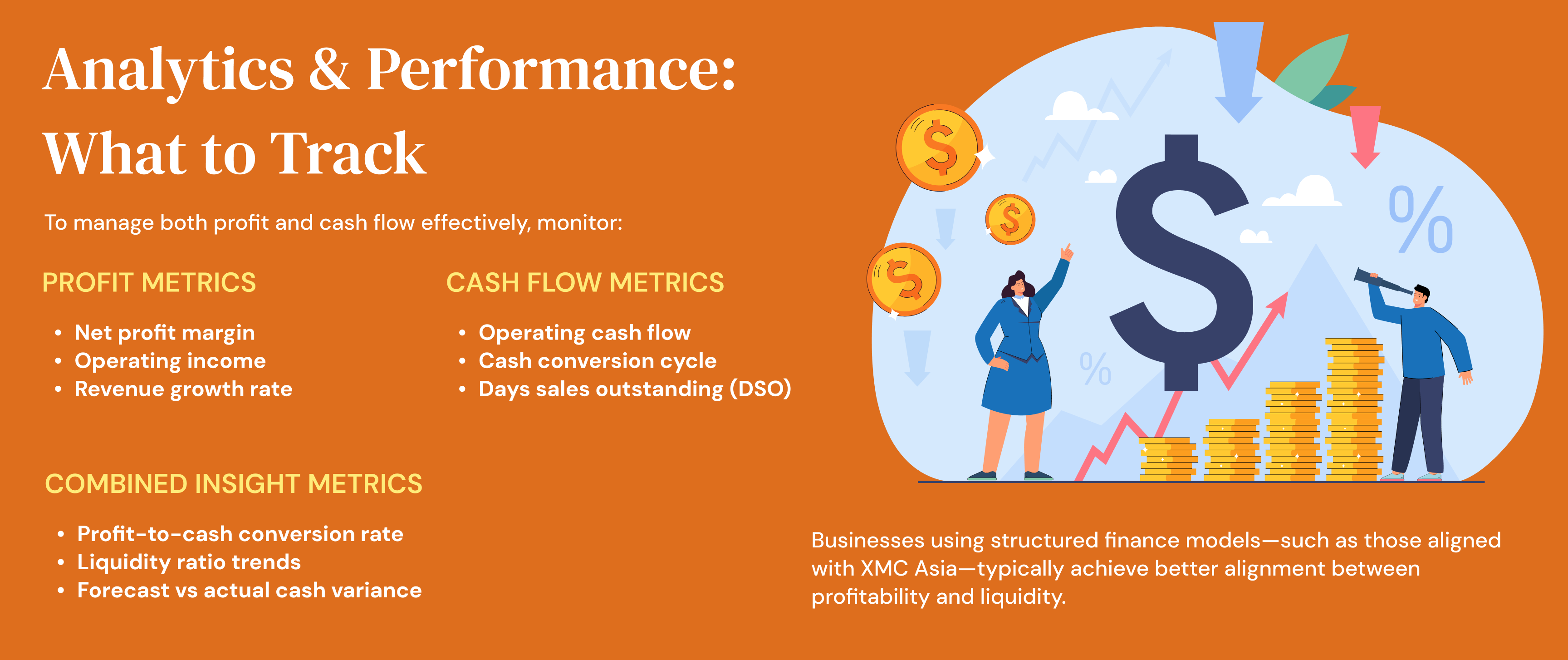
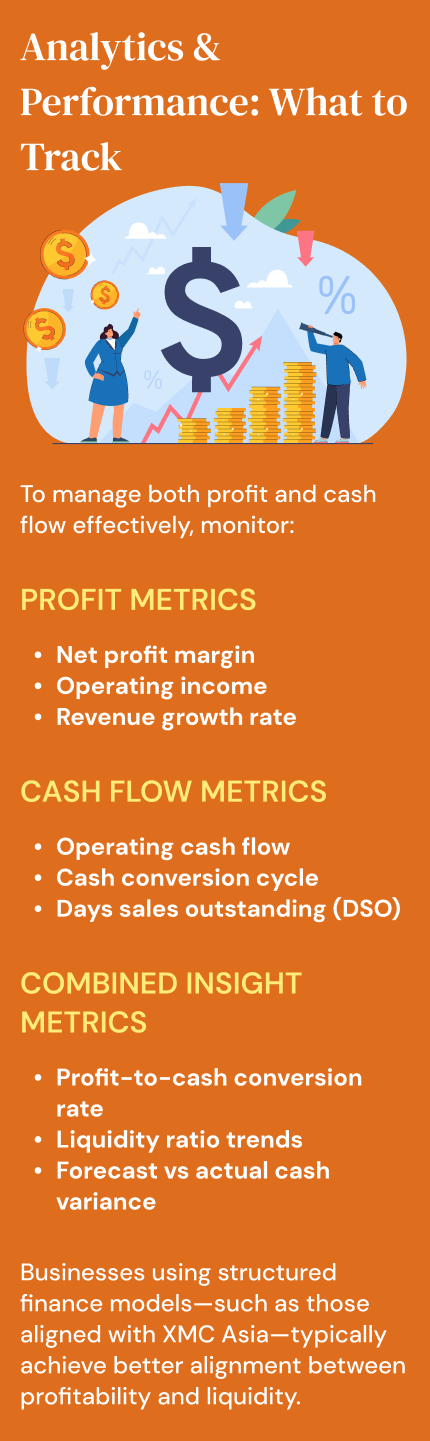
For growing businesses, especially those supported by structured financial partners like XMC Asia, mastering both metrics is essential to avoid financial blind spots and ensure long-term stability.