
For many businesses, year-end success is determined long before December arrives. By the middle of the year, organizations have already generated enough financial and operational data to identify trends, uncover risks, and adjust strategies. A Year-to-Date (YTD) Review provides an opportunity to evaluate performance, make informed decisions, and improve outcomes before the fiscal year closes.
For growing companies working with strategic finance partners like XMC Asia, a mid-year review is more than a reporting exercise—it is a critical tool for improving profitability, cash flow, and operational performance.
What Is a Year-to-Date Review?
A Year-to-Date Review is a structured assessment of a company’s financial and operational performance from the beginning of the year through the current reporting period.
It helps leadership answer important questions:
- Are we meeting our revenue goals?
- Is profitability tracking as expected?
- Are expenses under control?
- Do we need to adjust budgets or forecasts?
- What risks could impact year-end performance?
Rather than waiting until year-end to evaluate results, businesses can take corrective action while there is still time to influence outcomes.
Why Mid-Year Reviews Matter
Many organizations create annual plans but fail to revisit them until the end of the year. This can lead to missed opportunities and preventable challenges.
A mid-year review helps businesses:
- Identify performance gaps early
- Adjust financial forecasts
- Improve resource allocation
- Strengthen cash flow management
- Align teams around updated goals
Most importantly, it transforms planning from a static exercise into an ongoing management process.
Key Areas to Review Mid-Year

Revenue Performance
Start by comparing actual revenue against budget and forecast targets.
Review:
- Revenue growth trends
- Top-performing products or services
- Underperforming business segments
- Sales pipeline strength
Ask:
- Are revenue targets still realistic?
- Which offerings are driving the strongest results?
- Are market conditions affecting demand?
Understanding revenue performance provides the foundation for every other financial decision.

Profitability Analysis
Revenue growth alone does not guarantee success.
Review:
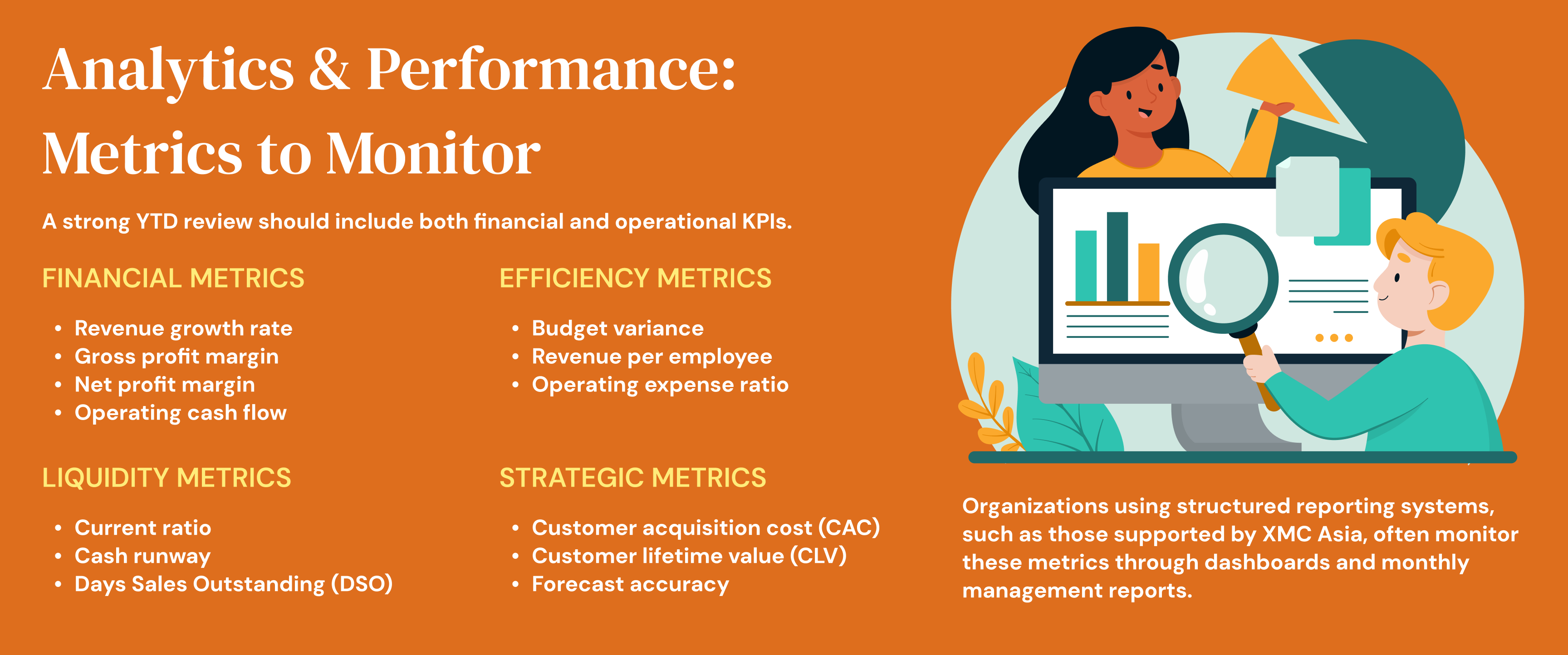
- Gross profit margin
- Operating margin
- Net profit margin
- Profitability by customer, service, or product line
A profitability review often reveals hidden issues such as:
- Rising delivery costs
- Excessive discounting
- Inefficient processes
Businesses supported by finance frameworks like XMC Asia frequently use profitability analysis to focus resources on the most valuable opportunities.

Cash Flow Health
Cash flow remains one of the most important indicators of business stability.
Evaluate:
- Operating cash flow
- Accounts receivable aging
- Accounts payable obligations
- Cash reserves
Key questions include:
- Are customers paying on time?
- Do we have sufficient liquidity for planned investments?
- Is cash flow keeping pace with growth?
Even profitable companies can face financial strain if cash management is weak.

Expense Management
Analyze spending patterns across the organization.
Review:
- Department budgets
- Operational expenses
- Technology investments
- Vendor costs
Look for:
- Unnecessary spending
- Budget overruns
- Opportunities for cost optimization
Mid-year is an ideal time to reallocate resources toward higher-priority initiatives.

Forecast Accuracy
Compare actual performance against projections.
Review:
- Revenue forecasts
- Expense forecasts
- Cash flow projections
- Hiring plans
If actual results differ significantly from expectations, leadership should update assumptions and revise forecasts for the remainder of the year.
Mid-Year Actions That Improve Year-End Results
Update Financial Forecasts
Many businesses continue operating under assumptions made at the start of the year.
Instead:
- Reforecast revenue
- Adjust expense expectations
- Reevaluate investment priorities
Accurate forecasts support better decision-making for the second half of the year.
Strengthen Cash Flow Management
Consider:
- Accelerating collections
- Reviewing payment terms
- Improving invoicing processes
- Managing working capital more effectively
Small improvements in cash flow can have a significant impact on year-end stability.
Focus on High-Margin Opportunities
Review which products, services, and customers generate the strongest returns.
Prioritize:
- High-margin offerings
- Profitable customer segments
- Scalable revenue streams
This approach improves profitability without necessarily increasing costs.
Optimize Operating Expenses
Mid-year is an excellent time to eliminate inefficiencies.
Examples include:
- Reducing unnecessary subscriptions
- Renegotiating vendor agreements
- Automating manual processes
- Improving workflow efficiency
Cost optimization should focus on eliminating waste—not reducing value.
Reassess Hiring and Growth Plans
Growth initiatives should align with current financial performance.
Review:
- Workforce requirements
- Expansion plans
- Capital expenditures
Finance-first organizations ensure that growth decisions remain financially sustainable.
Prepare for Tax Planning
The middle of the year is often the best time to begin year-end tax planning.
Review:
- Expected taxable income
- Deduction opportunities
- Capital investments
- Compliance requirements
Early planning creates more options than last-minute adjustments.
Common Mistakes During Mid-Year Reviews
- Focusing only on revenue
- Ignoring cash flow trends
- Failing to update forecasts
- Delaying corrective actions
- Reviewing performance without creating an action plan
A review is valuable only if it leads to measurable improvements.
Conclusion
A Year-to-Date Review is one of the most effective tools for improving year-end results. By evaluating financial performance at the midpoint of the year, businesses gain the opportunity to adjust strategies, strengthen cash flow, improve profitability, and reduce risk before the year closes.
Rather than waiting for year-end reports to reveal what went wrong, proactive organizations use mid-year insights to shape what happens next.
For growing companies working with strategic finance partners like XMC Asia, a disciplined YTD review creates the visibility and accountability needed to finish the year stronger than it started.