
As companies scale, tax obligations become more complex, more time-sensitive, and far more impactful on profitability. Waiting until filing season is no longer enough—strategic tax planning before year-end is what separates reactive businesses from financially optimized ones.
For growing organizations working with operational partners like XMC Asia, year-end tax strategy becomes a critical lever for improving cash flow, compliance, and long-term financial efficiency.
What Is Strategic Tax Planning?
Strategic tax planning is the proactive process of analyzing financial activities throughout the year to legally minimize tax liabilities before the fiscal year closes.
It focuses on:
- Timing income and expenses
- Maximizing allowable deductions
- Structuring business operations efficiently
- Preparing for compliance and reporting requirements
Unlike tax filing (which is historical), tax planning is forward-looking and decision-driven.
Why Year-End Tax Planning Matters
The end of the fiscal year is the last opportunity to influence taxable income. Once the books close, most optimization opportunities are gone.
Key reasons it matters:
- Tax liabilities become fixed after year-end
- Missed deductions cannot always be recovered
- Financial decisions made late are often ineffective
- Compliance risks increase under time pressure
This is why structured planning—especially for scaling businesses—is essential.
Key Tax Planning Actions Before Year-End

Review Revenue Recognition Timing
Analyze when income is recorded. In some cases, deferring or accelerating revenue can optimize tax exposure depending on your jurisdiction and structure.

Maximize Deductible Expenses
Before closing the year:
- Prepay necessary expenses
- Review vendor invoices
- Identify eligible operational costs
- Ensure proper categorization of deductions
This helps reduce taxable income legally.

Accelerate or Delay Capital Purchases
Strategic timing of asset purchases can impact depreciation schedules and tax deductions.
Businesses should evaluate:
- Equipment upgrades
- Software investments
- Infrastructure expansion

Reconcile Intercompany Transactions
For multi-entity structures, ensure:
- Intercompany balances are accurate
- Eliminations are properly recorded
- No duplicated income or expenses exist
This is especially important for companies with centralized finance operations supported by XMC Asia.

Review Payroll and Bonus Structuring
Compensation timing can significantly affect taxable income and employer obligations.
Consider:
- Year-end bonuses
- Deferred compensation plans
- Employee benefits optimization

Evaluate Tax Loss Harvesting (If Applicable)
If your business has underperforming assets or investments, losses may be used to offset gains.
Key Benefits of Strategic Tax Planning
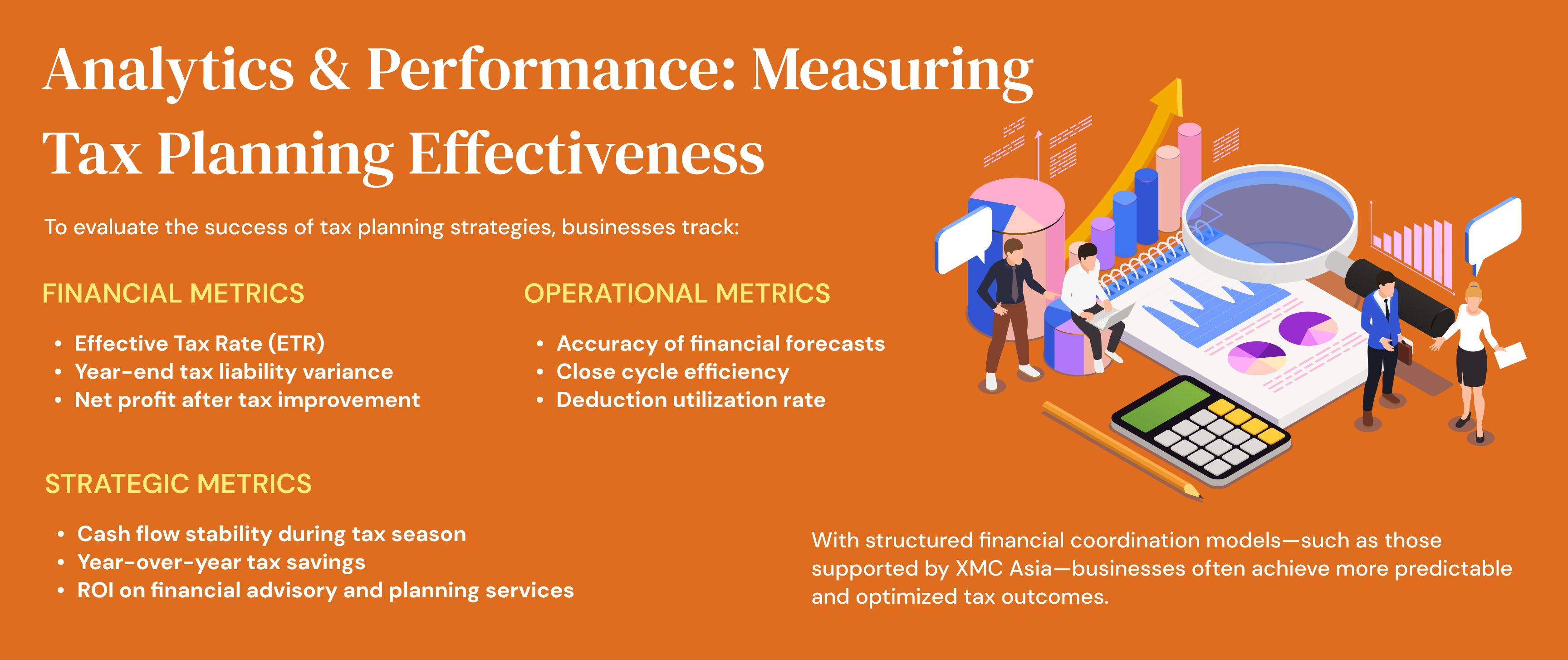
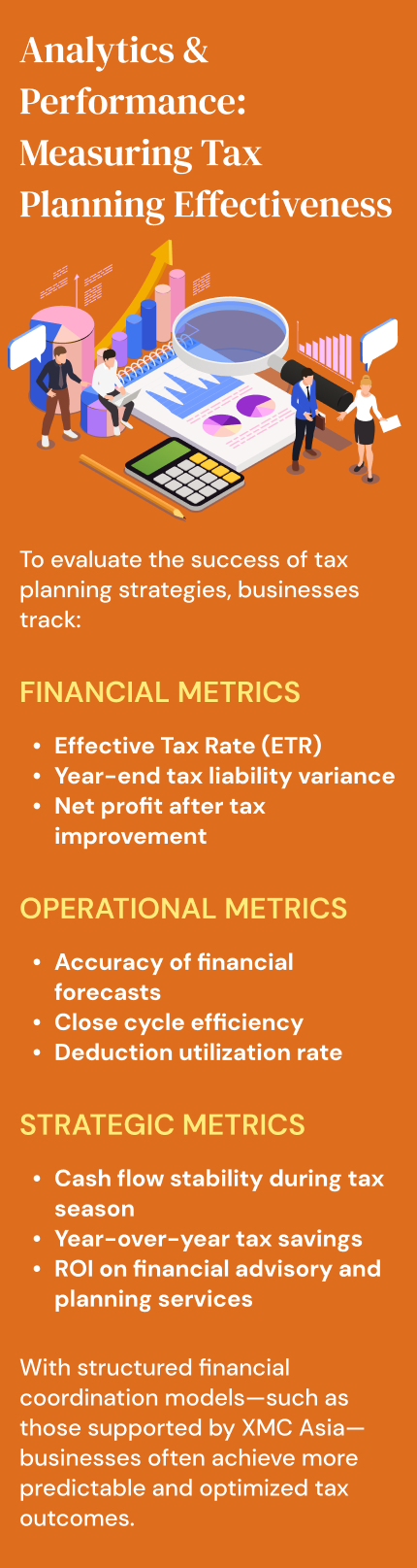
Lower Effective Tax Rate
Proper planning reduces unnecessary tax exposure legally and efficiently.
Improved Cash Flow Management
By anticipating liabilities, businesses avoid last-minute financial strain.
Reduced Compliance Risk
Cleaner books and structured planning reduce audit exposure.
Better Financial Decision-Making
Tax-aware decisions improve overall business profitability.
Stronger Year-End Reporting
Accurate planning ensures smoother audits and faster reporting cycles.
Common Mistakes Companies Make Before Year-End
- Waiting until December to start planning
- Ignoring intercompany reconciliation issues
- Misclassifying expenses throughout the year
- Failing to forecast tax exposure early
- Overlooking compliance differences across regions
These mistakes often result in avoidable tax overruns and audit complications.
Conclusion
Strategic tax planning is not a year-end task—it is a year-long financial discipline that peaks before closing the books.
Companies that prepare early:
- Reduce tax burdens
- Strengthen compliance
- Improve cash flow control
- Gain clearer financial visibility
For growing businesses, especially those working with partners like XMC Asia, year-end tax planning is a critical component of scalable financial success—not just a compliance requirement.