
Modern finance is no longer just about recording transactions—it is about transforming data into actionable decisions. Businesses that rely only on historical reporting often react too late, while those that use analytics gain a forward-looking advantage.
For growing companies working with structured finance partners like XMC Asia, financial analytics becomes a core driver of performance, efficiency, and scalable decision-making.
What Is Financial Analytics?
Financial analytics is the process of collecting, analyzing, and interpreting financial data to improve business decisions and performance outcomes.
It connects:
- Accounting data
- Operational metrics
- Business performance indicators
into one decision-making framework.
Why Traditional Reporting Is Not Enough
Traditional financial reporting is:
- Historical (shows what already happened)
- Static (monthly or quarterly snapshots)
- Limited in context
This creates key problems:
- Delayed decision-making
- Missed opportunities
- Poor visibility into performance drivers
- Reactive financial management
Analytics solves this by shifting finance from reporting → interpretation → action.
How Analytics Improves Financial Performance

Better Cash Flow Management
Analytics helps businesses track:
- Cash inflows and outflows
- Payment patterns
- Liquidity trends
This allows companies to anticipate shortages and optimize working capital.

Improved Profitability Visibility
Instead of looking at total profit, analytics breaks performance down by:
- Product line
- Customer segment
- Region or entity
- Service type
This reveals which areas truly drive margins—and which drain them.

Faster and Smarter Decision-Making
With real-time dashboards and predictive insights, leaders can:
- Adjust pricing strategies
- Control expenses early
- Allocate resources efficiently

Budget Control and Variance Tracking
Analytics compares:
- Planned budgets vs actual performance
This helps identify overspending or underperformance before it escalates.

Risk Detection and Prevention
Financial analytics highlights early warning signs such as:
- Declining margins
- Rising operational costs
- Cash flow instability
- Delayed receivables
Core Areas of Financial Analytics
1. Descriptive Analytics
Explains what happened:
- Revenue reports
- Expense breakdowns
- Profit summaries
2. Diagnostic Analytics
Explains why it happened:
- Cost drivers
- Customer behavior analysis
- Margin breakdowns
3. Predictive Analytics
Forecasts what will happen:
- Cash flow projections
- Revenue forecasting
- Expense trends
4. Prescriptive Analytics
Suggests what should be done:
- Cost optimization strategies
- Pricing adjustments
- Investment decisions
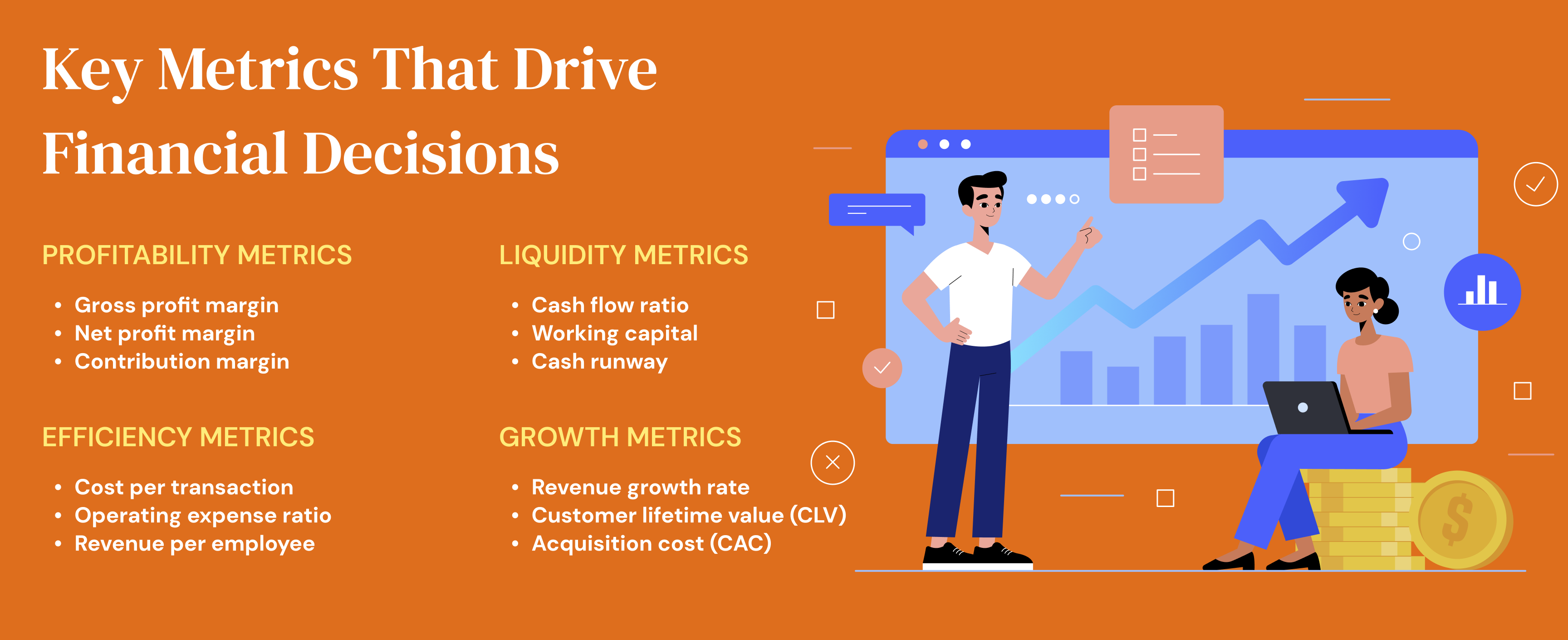
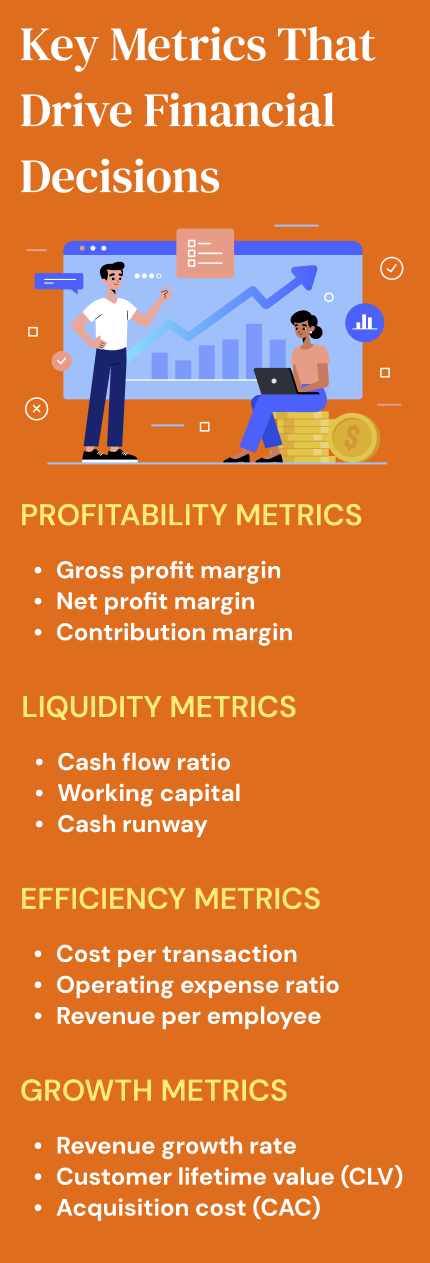
Role of Dashboards in Financial Analytics
Dashboards transform analytics into real-time visibility by:
- Visualizing KPIs
- Tracking performance trends
- Centralizing financial data
- Enabling faster decision cycles
Instead of reading reports, decision-makers interact with live financial insights.
How Businesses Fail Without Financial Analytics
Common challenges include:
- Over-reliance on spreadsheets
- Delayed reporting cycles
- Lack of KPI tracking
- No segmentation of financial data
- Reactive instead of proactive decisions
These issues often result in hidden financial inefficiencies.
How to Build an Analytics-Driven Finance Function
1. Centralize Financial Data
Integrate accounting, payroll, sales, and banking systems.
2. Define Key Business KPIs
Focus only on metrics that influence decisions.
3. Automate Reporting Processes
Reduce manual work and improve accuracy.
4. Implement Real-Time Dashboards
Enable instant access to financial insights.
5. Use Scenario Planning
Model different financial outcomes before making decisions.
Structured financial partners like XMC Asia often support these transformations by implementing standardized analytics frameworks and reporting systems.
Key Benefits of Financial Analytics
- Faster and more accurate decision-making
- Improved cash flow visibility
- Higher profitability through better cost control
- Early detection of financial risks
- Stronger strategic planning capabilities
- Scalable finance operations
Analytics & Performance: What Success Looks Like
Companies that adopt financial analytics typically achieve:
- Reduced reporting time
- Improved forecast accuracy
- Lower operational costs
- Higher profit margins
- Stronger financial discipline
Conclusion
Financial analytics transforms finance from a backward-looking function into a forward-looking decision engine.
By turning raw data into insights, businesses can:
- Act faster
- Reduce risk
- Improve profitability
- Scale with confidence
For growing companies, especially those working with structured finance partners like XMC Asia, analytics is not just a tool—it is a competitive advantage that drives smarter, more sustainable growth.