
The accounting profession lately is facing a challenge that goes beyond deadlines and regulatory changes: the wellbeing of its people. Long hours, high-stakes work, peak seasons, and evolving client expectations have pushed many accountants to the edge. In this climate, firms are finally starting to acknowledge that mental health matters — and this is where XMC Asia can play a pivotal role by helping firms build resilient teams, not just capable ones.
The Reality of Mental Health Struggles in Accounting
While accounting is often seen as a stable, numbers-driven profession, the reality is that many practitioners are experiencing serious mental health issues:
- A survey of global accounting professionals found that 88% say increased working hours caused by a skills-shortage crisis are “significantly” harming their mental health, work-life balance and stress levels; one-third described the harm as “severe”.
- According to a poll of accounting/tax professionals, about 28% say their work is harming their mental health (22% moderate, 6% strongly).
- Further, nearly 30.4% of accountants report personal struggle with mental health issues; over 51% acknowledge depression and anxiety leave them dreading going to work; and 43.5% believe their job is a significant contributor to their poor mental health.
- Also, 71% of accounting professionals say they want more help from their employer to manage mental health; 69% expect to move roles within two years.
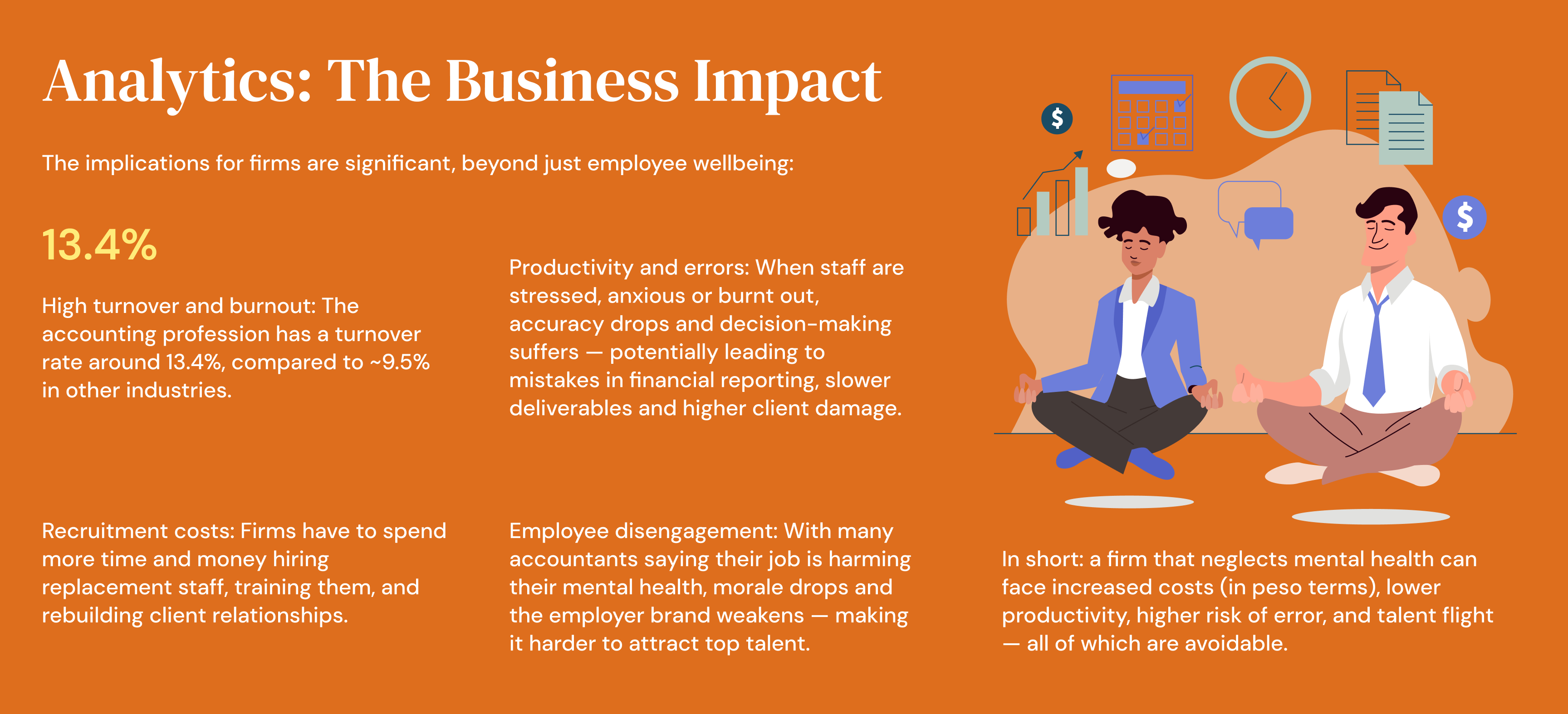
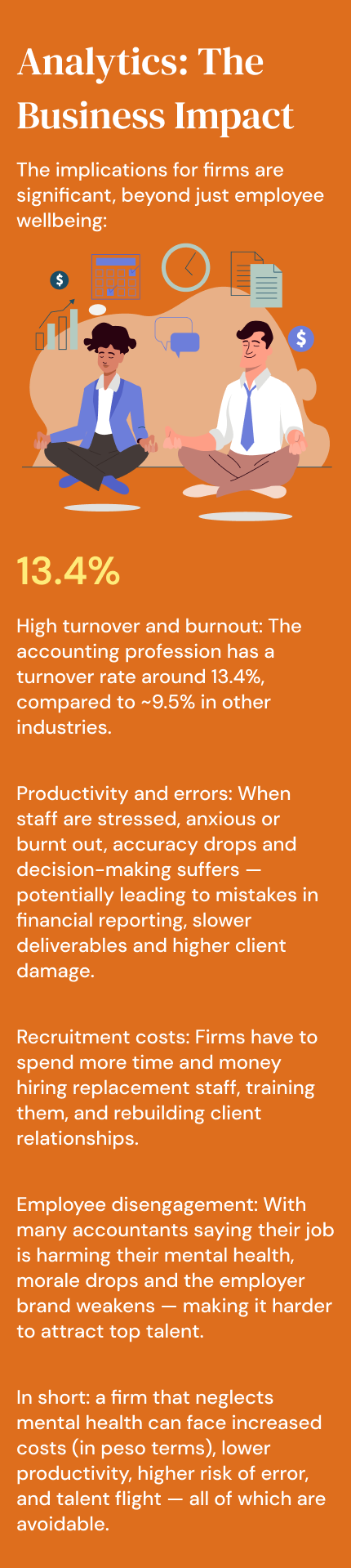
These data make it clear: mental health is not an optional “nice-to-have” for accounting firms — it’s a real business risk.
Why Firms Are Finally Talking About It
Several forces are pushing the conversation about mental health in accounting into the mainstream:
- Talent scarcity and competition – With the industry facing skill shortages, firms realise that they must offer more than salary: work-life balance, wellbeing and supportive culture matter.
- Changing workforce expectations – Younger accountants expect employers to care about holistic wellbeing; the old “just work long hours” culture is less acceptable.
- Regulatory and reputational risk – Errors from overworked staff, burnout-related turnover, and a bad employer reputation can hurt a firm’s brand and client trust.
- Global mindset shift – Organisations globally are acknowledging that mental health is part of operational risk and strategic advantage.
- Role of partners like XMC Asia – Firms are engaging specialist partners (such as XMC Asia) who understand how to build modern, resilient accounting teams — not just manpower.
How XMC Asia Helps Accounting Firms Address Mental Health

Talent acquisition and onboarding
XMC Asia helps firms recruit accountants who are not only technically capable but aligned with a culture of wellbeing and sustainable performance.

Workload design and flexibility
Advising on team structure, remote/hybrid arrangements, and workload cycles that avoid “busy season” burnout.

Training and awareness programs
Providing modules on mental health literacy, stress management, peer support and supervisor training — helping employees feel safe to raise concerns.

Performance analytics and monitoring
Using dashboards that track not just output but signs of stress/burnout (such as high overtime, absenteeism, declining engagement) so firms can intervene early.

Retention and culture-building
Supporting firms to build environments where mental health talk is normalised, giving employees a voice and reducing attrition costs.
Key Benefits for Accounting Firms
Lower turnover costs
With fewer staff exiting due to stress or burnout, savings in recruitment/training can be significant in peso terms.
Better performance and fewer errors
Staff who are mentally well perform better, make fewer mistakes, meet deadlines and deliver higher value.
Stronger employer brand
Firms known for caring about wellbeing attract better candidates (especially younger talent) and retain clients more easily.
Sustainable culture
Rather than cyclical crash-and-burn busy seasons, firms can build stable teams, predictable workloads and consistent output.
Reduced risk
Fewer burnout-related mistakes, less absenteeism, fewer legal or regulatory problems tied to overworked staff.
Conclusion
The time when mental health was a “nice extra” is gone. For the accounting profession — where pressure, long hours, tight deadlines and high stakes are the norm — treating mental wellbeing as central to strategy is no longer optional. Firms that ignore it risk high turnover, poor performance and reputational damage.
Partnering with a specialist like XMC Asia enables firms to embed wellbeing into their DNA: hiring the right talent, designing humane workloads, monitoring stress signals, training around mental health and building retention-focused cultures.