
Messy financial records are one of the biggest risks businesses face heading into audit season. Missing entries, misclassified expenses, and unreconciled accounts can lead to compliance issues, penalties, and inaccurate financial reporting.
A structured bookkeeping clean-up process—especially when supported by operational partners like XMC Asia—helps businesses restore accuracy, improve visibility, and prepare confidently for audits.
What Is Bookkeeping Clean-Up?
Bookkeeping clean-up is the process of reviewing, correcting, and organizing historical financial records to ensure they are complete, accurate, and audit-ready.
It typically includes:
- Reconciling bank and credit card statements
- Correcting misclassified transactions
- Identifying and filling missing entries
- Cleaning duplicate or erroneous records
- Updating accounts receivable and payable
- Ensuring tax categories are properly assigned
Unlike day-to-day bookkeeping, clean-up work is corrective and retrospective—it fixes what has already been recorded incorrectly or incompletely.
Why Bookkeeping Gets Messy
Before fixing the problem, it’s important to understand the root causes:
1. Lack of Real-Time Recording
Transactions are entered late or in batches, increasing the risk of errors.
2. Poor System Integration
Disconnected tools (POS, payroll, banking, spreadsheets) lead to fragmented data.
3. Rapid Business Growth
Scaling companies often outgrow their bookkeeping systems without upgrading processes.
4. Inconsistent Oversight
Without structured review cycles, small errors accumulate over time.
5. Manual Data Entry Errors
Human error remains one of the most common causes of inaccurate financial data.
Key Steps in Bookkeeping Clean-Up (XMC Asia Approach)
1. Financial Data Audit
Review all accounts, ledgers, and reports to identify inconsistencies.
2. Bank & Credit Card Reconciliation
Match internal records with external statements to detect missing or duplicate transactions.
3. Transaction Reclassification
Correct improperly categorized expenses, income, and transfers.
4. Accounts Review
Verify: Accounts Receivable (outstanding invoices) Accounts Payable (unpaid bills)
5. Journal Entry Adjustments
Record corrections for depreciation, accruals, and historical adjustments.
6. Final Review & Reporting
Generate clean, audit-ready financial statements.
Key Benefits of Bookkeeping Clean-Up

Audit Readiness
Clean books reduce audit delays, flags, and compliance risks.

Accurate Financial Reporting
Better data leads to better decision-making and forecasting.

Improved Cash Flow Visibility
Clear records help identify receivables, liabilities, and cash gaps.

Reduced Tax Risks
Correct classification minimizes errors in tax reporting and filing.

Operational Efficiency
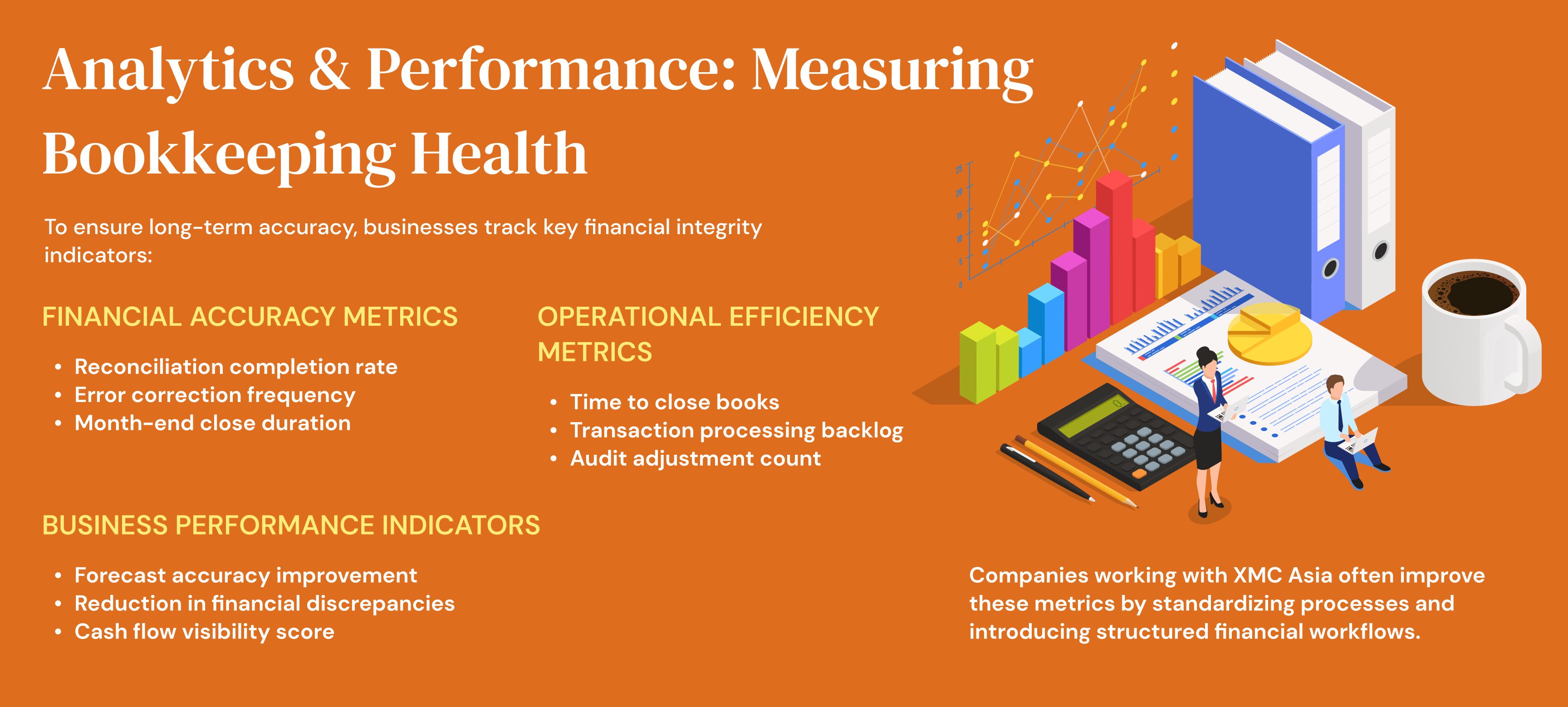
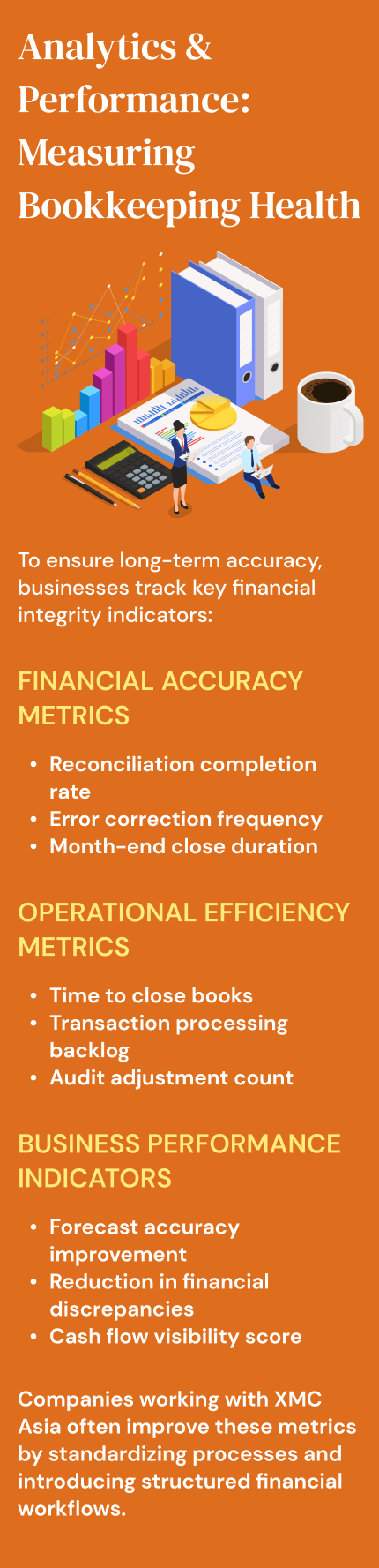
Finance teams spend less time fixing errors and more time analyzing performance.
When Should You Do a Bookkeeping Clean-Up?
You likely need a clean-up if:
- Your books haven’t been reviewed for several months
- You’re preparing for an audit or tax filing
- Reports show inconsistent or unclear financial data
- Bank balances don’t match internal records
- Your business recently scaled rapidly
The best time to fix your books is before audit season begins, not during it.
Conclusion
Bookkeeping clean-up is not just corrective accounting—it’s financial risk management.
Businesses that proactively clean their books:
- Avoid audit complications
- Improve financial decision-making
- Strengthen compliance readiness
- Gain clearer visibility into performance
With structured support from XMC Asia, companies can transform messy, fragmented financial records into reliable, audit-ready systems that support long-term growth.