
In today’s global business landscape, building a diverse and inclusive accounting workforce isn’t just a “nice‑to‑have” — it’s a strategic imperative. As accounting firms evolve to meet client expectations and tackle complex challenges, diversity fuels innovation, enhances problem‑solving, and strengthens organizational culture. With forward‑looking partners like XMC Asia supporting firms on their diversity journey, the industry is better positioned to attract, retain, and empower talent from all backgrounds.
In this blog, we explore key analytics and statistics, explain the benefits of diversity and inclusion, and conclude with actionable insights for firms committed to fostering a more equitable accounting workforce.
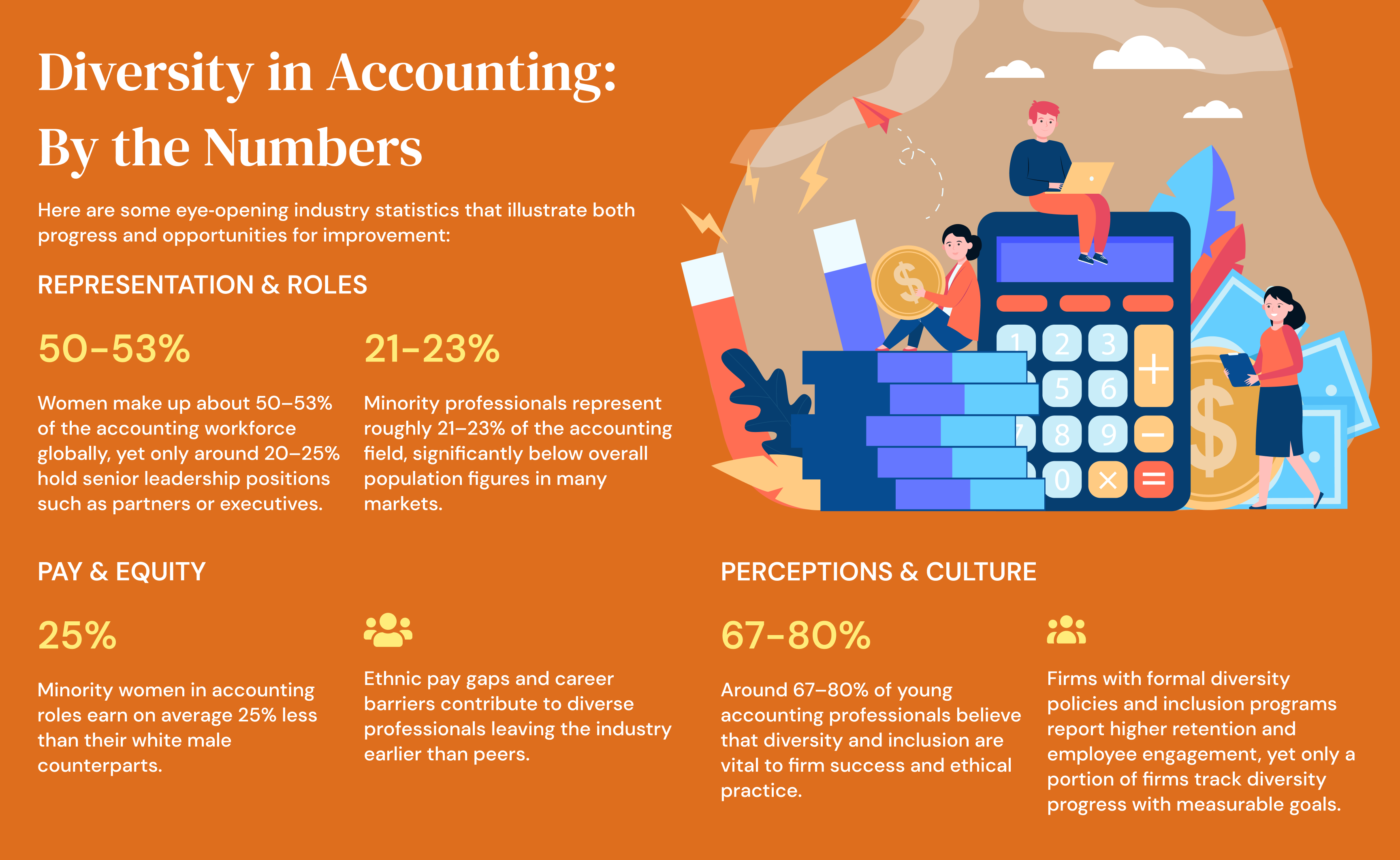

Why Diversity & Inclusion Matter in Accounting

Better Problem‑Solving and Innovation
Diverse teams bring varied perspectives and experiences that help uncover assumptions and generate more creative solutions to complex accounting and business challenges. Approximately 80% of accounting professionals agree that diversity improves problem‑solving and innovation.

Higher Employee Satisfaction & Retention
Firms with supportive inclusive cultures experience higher retention rates among diverse employees, reducing costly turnover.

Broader Talent Attraction
Today’s accounting graduates — including women, minorities, and LGBTQ+ professionals — increasingly seek employers with strong diversity commitments. Over 50% of early professionals say they would choose firms with credible diversity initiatives.

Enhanced Ethical Standards
Diversity contributes to ethical awareness and reduces bias in decision‑making — critical in a profession centered on trust, accuracy, and compliance.

Competitive Advantage
Research suggests that organizations with diverse leadership see higher revenue and stronger performance compared to less diverse peers.
Best Practices for Building an Inclusive Workforce
Establish Clear DEI Goals
Set measurable targets for diverse hiring, retention, and leadership representation — and track progress regularly.
Diversify Recruiting Channels
Go beyond traditional networks to engage candidates from underrepresented communities and universities with diverse student bodies.
Provide Mentorship & Career Pathways
Mentorship programs help diverse professionals navigate career advancement, reducing the risk of early attrition.
Train for Inclusion
Offer training on unconscious bias, cultural competence, and inclusive leadership to all staff levels.
Leverage Inclusive Technology Solutions
Tools and platforms like XMC Asia support inclusive workforce strategies by enabling flexible work, collaborative environments, and data‑driven insights into team performance and engagement. These systems help ensure every voice is heard and valued.
The Role of XMC Asia in Diversity & Inclusion
XMC Asia plays a supportive role in helping firms build diverse and inclusive accounting teams by offering:
✔️ Remote and hybrid work solutions that expand talent pools beyond local geographies
✔️ Cloud‑based systems and collaboration tools that foster equitable participation and visibility
✔️ Analytics dashboards that allow leaders to monitor DEI metrics and workforce trends
✔️ Support for structured training and development programs tailored to inclusive growth
By integrating technology and people‑centered practices, XMC Asia helps firms not only attract diverse talent but also create an environment where every team member can thrive.
Conclusion: A More Inclusive Future for Accounting
The accounting profession is at a pivotal moment. As firms grow more global and client demands become increasingly complex, diversity and inclusion have shifted from optional cultural efforts to essential strategic imperatives. Analytics and industry research show that inclusive teams not only work better together but also produce better business outcomes.