
As automation reshapes the workplace, many professionals are facing a new form of workplace stress: automation anxiety. This is the fear or uncertainty employees feel when confronted with emerging technologies that may change job responsibilities or even eliminate certain tasks altogether. While automation can boost productivity and accuracy, it also challenges teams to adapt quickly to tech-driven roles — and that transition isn’t always easy.
In this blog post, we’ll explore the state of automation anxiety, backed by the latest analytics and statistics, outline key benefits of embracing automation, and share practical strategies for helping teams adapt, with reference to XMC Asia as a catalyst for smooth integration.
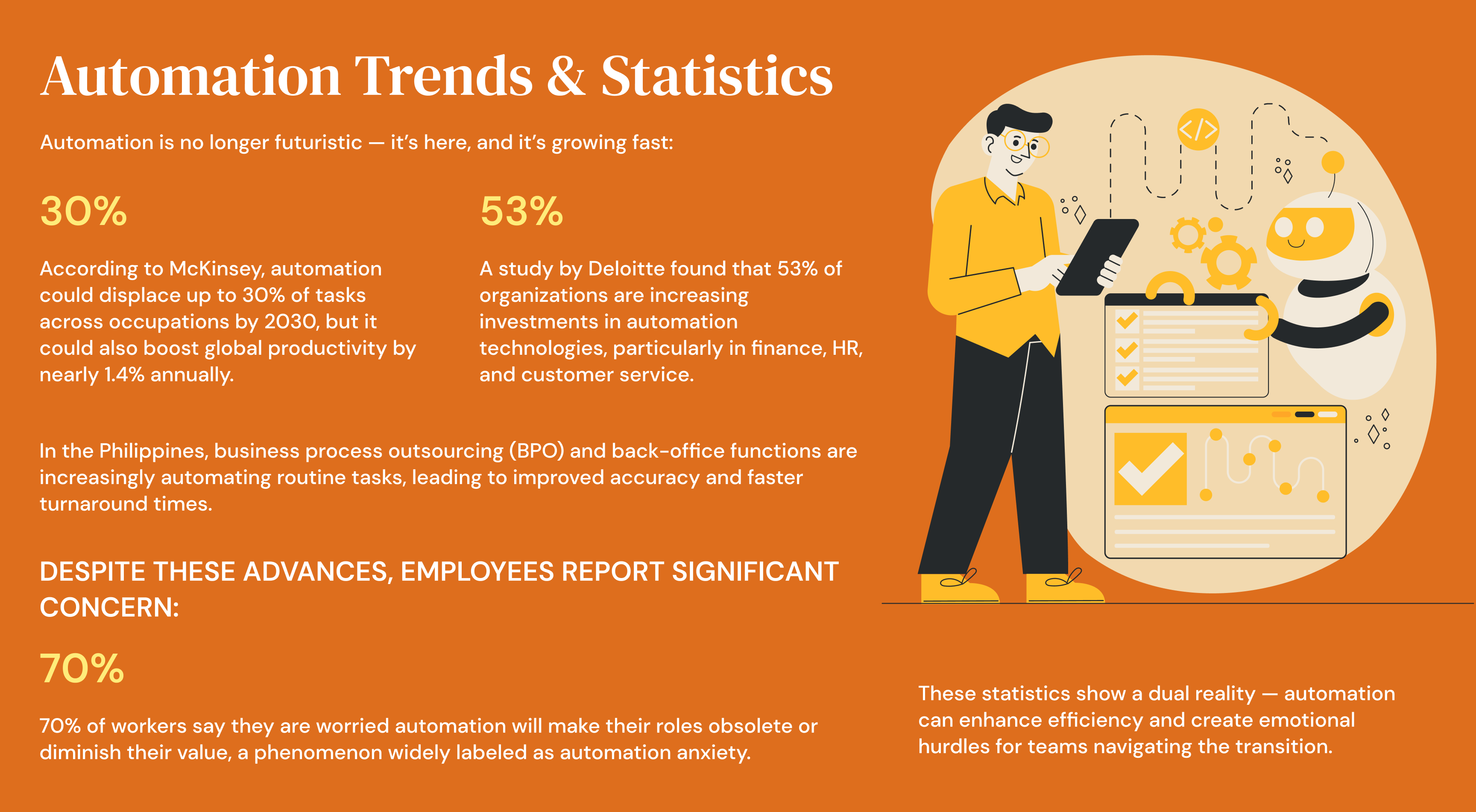

What Is Automation Anxiety?
Automation anxiety refers to the emotional response workers have when they anticipate or experience changes due to technology. It may include:
- Fear of job loss
- Stress about learning new tools
- Decreased confidence in technical skills
- Resistance to change
This anxiety isn’t irrational. As automation takes over repetitive tasks like data entry or report generation, professionals often feel unsure about their future place in an increasingly tech-driven workplace.
Why Helping Teams Adapt Matters
Addressing automation anxiety isn’t only compassionate — it’s strategic. Companies that support their workforce through technological transitions see better outcomes in productivity, morale, and innovation.
Here’s how support systems make a difference:
| Impact Area | Benefit of Supportive Adaptation |
|---|---|
Employee Retention |
Teams that feel supported are 40–60% more likely to stay post-automation. |
Productivity |
Tailored training reduces error rates and accelerates adoption. |
Innovation |
Employees comfortable with tech are more likely to suggest improvements. |
Many companies — including partners like XMC Asia — are offering training frameworks and hybrid support models to help teams build technical confidence alongside automation tools.
Key Benefits of Helping Teams Adapt

Enhanced Job Security and Employee Confidence
Companies that invest in reskilling see greater loyalty and reduced turnover. Investing in people sends a powerful message: we value you, and you’re part of the future.

Faster Technology Adoption
Tech adoption is smoother when teams feel confident using new systems. With coaching and guided workflows, employees become champions of automation rather than skeptics.

Increased Operational Efficiency
While automation takes over repetitive tasks, human workers can focus on higher-value responsibilities like strategy, analysis, and relationship management.

Competitive Advantage
Organizations that embrace automation with a people-centric approach often outperform peers that focus solely on technology. Supportive transitions help retain institutional knowledge and reduce risk.

Innovation and Continuous Improvement
Teams that understand automation not only use it — they improve it. Employee feedback leads to smarter workflows and better outcomes.
Real Results: Analytics & Case Insights
Here’s how automation and adaptation correlate in measurable terms:
- Organizations that provide structured automation training see adoption rates of 85% or higher, compared to less than 50% for those without formal support.
- Companies that invest in workforce reskilling report a 20–30% increase in productivity within the first year of automation implementation.
- Firms that pair automation with employee development programs experience lower stress indicators, with up to 40% fewer reports of burnout tied to technological change.
These numbers highlight an essential truth: technology by itself doesn’t drive success — people do.
Strategies for Helping Teams Adapt
Communicate Early and Often
Be transparent about what automation means for roles, timelines, and future expectations.
Offer Practical Training Programs
Hands-on workshops, online certifications, and structured skill-building sessions help employees gain confidence.
Celebrate Incremental Wins
Recognize milestones and improvements to reinforce progress and boost morale.
Pair Technology with Human Support
Platforms like XMC Asia provide hybrid models combining automation tools with expert guidance — helping teams transition without fear.
Encourage Peer Learning
Internal mentorship and collaboration encourage shared knowledge and reduce isolation.
Conclusion: Technology + People = Sustainable Growth
Automation is transforming how work gets done — but its success depends on people’s ability to adapt, feel supported, and find new purpose in tech-driven roles. Automation anxiety is not something to ignore; it’s a signal that employees need guidance, communication, and a clear path forward.
By investing in workforce development, offering tailored training, and leveraging partners like XMC Asia for support and tools, organizations can unlock the full potential of automation without sacrificing morale.