
In 2026, finance is no longer a back-office function—it is a core leadership capability. Companies that scale successfully are those where decision-makers think in financial terms first, not just operational or sales terms.
This shift is known as Finance-First Leadership, and it is becoming a defining trait of high-performing, scalable organizations. For businesses working with structured finance partners like XMC Asia, this mindset is often the difference between controlled growth and financial instability.
What Is Finance-First Leadership?
Finance-first leadership is a management approach where financial data, risk awareness, and profitability thinking guide all major business decisions.
It means leaders consistently ask:
- “What is the financial impact of this decision?”
- “How does this affect cash flow and margins?”
- “Is this scalable financially, not just operationally?”
It integrates finance into strategy—not after decisions are made, but before.
What Finance-First Leaders Do Differently in 2026

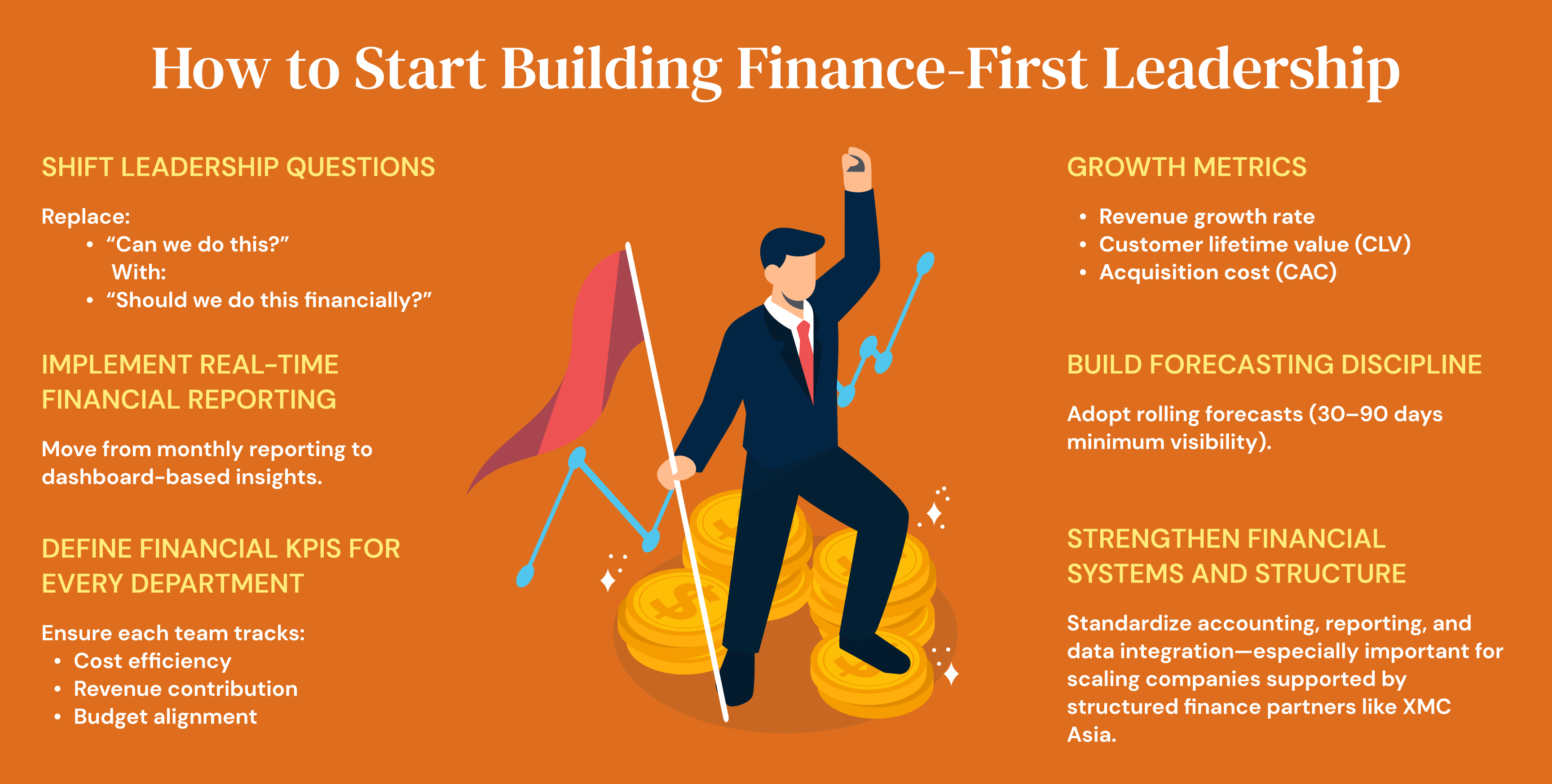
They Make Decisions Based on Real-Time Financial Data
Instead of relying on monthly reports, finance-first leaders use:
- Live dashboards
- Cash flow tracking systems
- Real-time KPI monitoring
They operate with current financial visibility, not historical summaries.

They Prioritize Cash Flow Over Revenue
Revenue is important—but cash flow determines survival.
Finance-first leaders consistently evaluate:
- Cash conversion cycles
- Payment timing risks
- Liquidity buffers
They understand that profitable companies can still fail without cash discipline.

They Treat Profitability as a Segment-Level Metric
Rather than looking at total profit, they analyze:
- Product-level margins
- Customer profitability
- Channel performance
- Entity-level contribution
This prevents “hidden losses” inside growing revenue streams.

They Embed Finance Into Every Department
Finance-first organizations ensure:
- Sales teams understand margin targets
- Operations teams track cost efficiency
- HR aligns hiring with budget constraints
- Marketing focuses on ROI, not just reach
Finance becomes a shared language across the company.

They Focus on Forecasting, Not Just Reporting
Instead of asking “What happened?”, they ask:
- “What will happen next?”
- “What if we scale this decision?”
- “What risks are emerging in the next 90 days?”
Forecasting becomes a core leadership tool.

They Use Systems That Scale Financial Control
Finance-first leaders invest in:
- Integrated accounting systems
- Automated reporting tools
- Multi-entity financial structures
- Standardized reporting frameworks
This is where structured finance support models like those used by XMC Asia help companies scale without losing financial discipline.
Why Finance-First Leadership Matters in 2026
Business environments are more complex due to:
- Faster market cycles
- Multi-channel revenue models
- Globalized operations
- Higher cost volatility
- Increased compliance pressure
Without finance-first thinking, companies often:
- Overgrow their cash flow capacity
- Misprice services or products
- Misallocate resources
- Miss early warning signs of financial stress
Key Pillars of Finance-First Leadership
Financial Visibility
Real-time access to accurate financial data.
Financial Discipline
Consistent budgeting, forecasting, and cost control.
Financial Accountability
Every department understands its financial impact.
Financial Agility
Ability to adjust quickly based on financial insights.
Financial Strategy Alignment
All business decisions tie back to financial outcomes.

Key Benefits of Finance-First Leadership
- Faster and smarter decision-making
- Stronger cash flow control
- Improved profitability visibility
- Reduced financial risk exposure
- More sustainable scaling
- Better alignment across teams
Common Mistakes Companies Make
- Treating finance as a reporting function only
- Ignoring cash flow in decision-making
- Scaling revenue without margin discipline
- Relying on outdated financial data
- Isolating finance from leadership strategy
Conclusion
Finance-First Leadership in 2026 is about more than financial awareness—it is about embedding financial thinking into every level of decision-making.
Companies that adopt this approach:
- Scale more sustainably
- Avoid financial blind spots
- Improve profitability quality
- Make faster, data-driven decisions
For growing organizations, especially those working with structured finance partners like XMC Asia, this mindset is not optional—it is a foundation for long-term success.