
A strong business doesn’t just track financial performance—it actively monitors early warning indicators that signal potential financial stress before it becomes a crisis.
For growing companies working with structured finance partners like XMC Asia, a financial health check is a continuous discipline, not a one-time review.
What Is a Financial Health Check?
A financial health check is the systematic review of key financial metrics to assess whether a business is:
- Stable
- Growing sustainably
- At risk of financial distress
It focuses on identifying problems early—before they affect cash flow, profitability, or operations.
Why Early Warning Metrics Matter
Most financial problems don’t appear suddenly. They build up gradually through:
- Poor cash management
- Declining margins
- Rising expenses
- Weak collections
Early detection allows businesses to:
- Correct issues faster
- Avoid liquidity crises
- Improve financial planning
- Protect profitability
Key Financial Metrics That Signal Trouble Early

Declining Cash Flow from Operations
This is one of the earliest and most critical warning signs.
Watch for:
- Negative operating cash flow
- Declining cash inflows from customers
- Increasing cash burn rate
👉 Even profitable companies can fail if cash flow weakens.

Rising Accounts Receivable (AR) Days
If customers take longer to pay, cash pressure increases.
Key indicators:
- Increasing Days Sales Outstanding (DSO)
- Growing overdue invoices
- Slower collections
👉 This often signals future liquidity problems.

Shrinking Profit Margins
Margins may decline due to:
- Rising operational costs
- Excessive discounting
- Inefficient delivery processes
Watch:
- Gross margin trend
- Net profit margin decline
👉 Small margin drops can compound into major losses over time.

Increasing Operating Expenses
If expenses grow faster than revenue, sustainability is at risk.
Red flags include:
- Rising overhead costs
- Uncontrolled hiring
- Increasing vendor costs

Cash Runway Shortening
Cash runway shows how long a business can operate with current cash reserves.
Warning signs:
- Reduced months of liquidity
- Increasing dependency on incoming payments
- Frequent cash shortages

Budget vs Actual Variance Growth
Large gaps between planned and actual performance indicate poor financial control.
Watch for:
- Overspending in departments
- Revenue shortfalls
- Consistent forecast inaccuracies

High Debt or Leverage Ratios
Debt can support growth—but excessive reliance is risky.
Indicators:
- Rising debt-to-equity ratio
- Increasing interest burden
- Difficulty meeting repayment schedules

Declining Revenue Growth Rate
Slowing revenue growth may signal:
- Market saturation
- Weak sales performance
- Product or service issues
Operational Warning Signs Behind the Numbers
Financial issues often appear first in operations:
- Delayed invoicing cycles
- Inventory buildup (for product-based businesses)
- Slow project delivery
- High employee turnover in finance teams
- Manual, error-prone reporting systems
How to Conduct a Financial Health Check
Review Cash Flow Weekly or Monthly
Do not wait for quarterly reports.
Monitor Core KPIs in Real Time
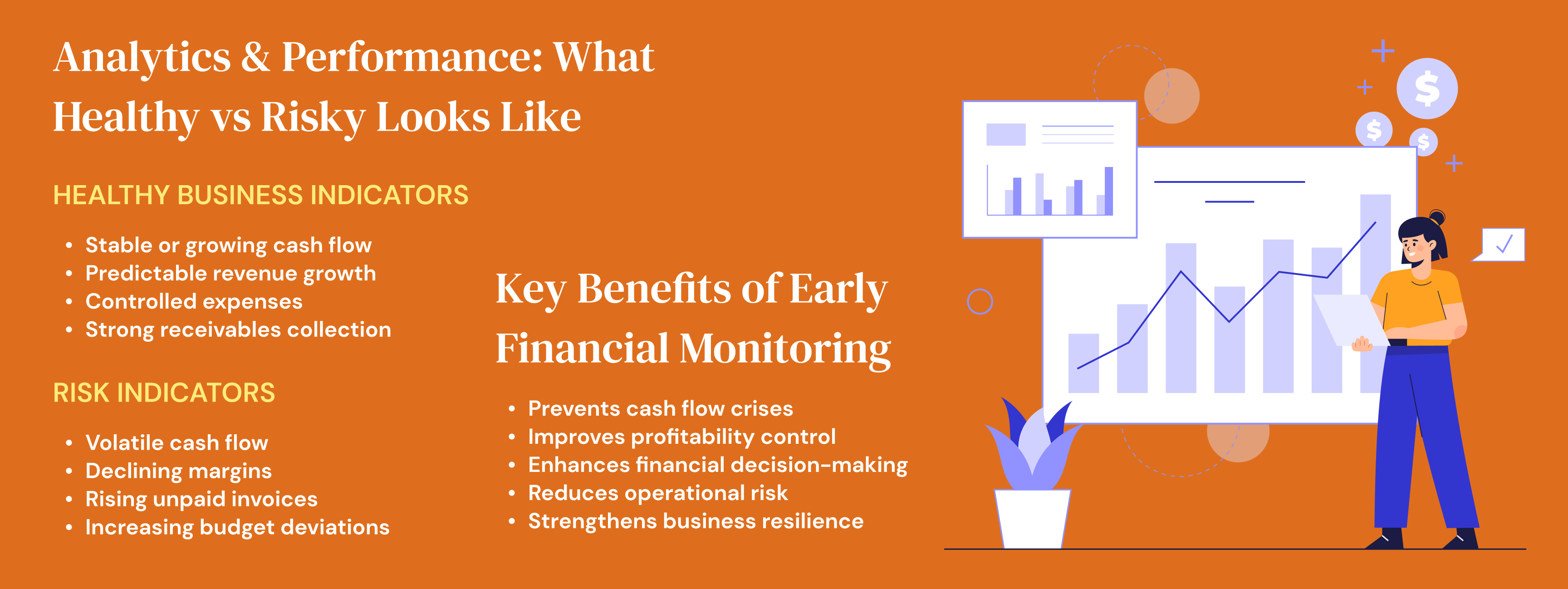
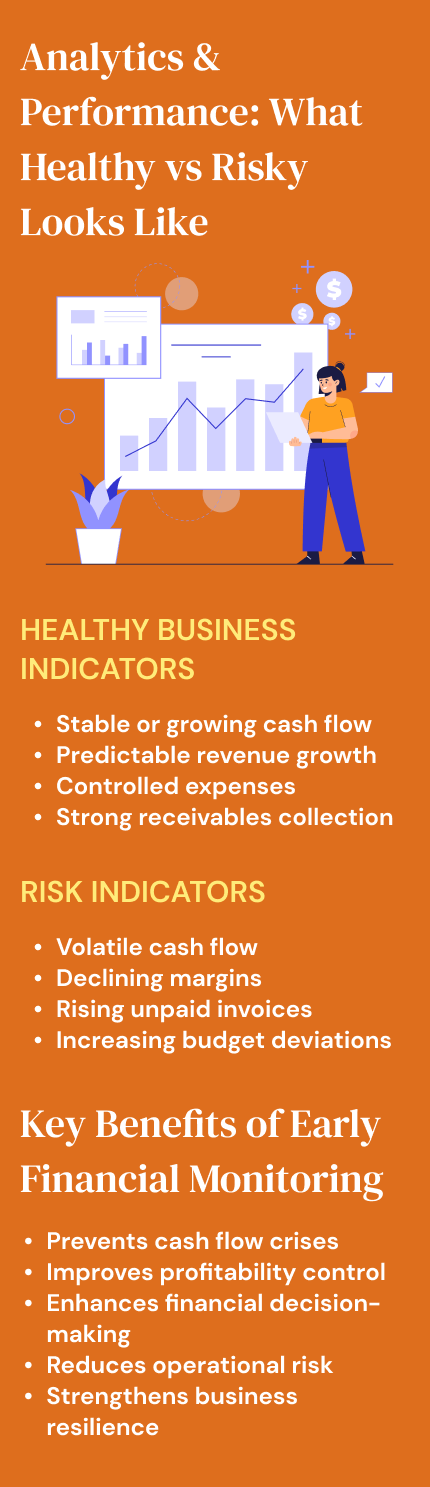
Use dashboards to track: Cash flow, Profit margins, Receivables, Expenses
Compare Budget vs Actual Performance
Identify deviations early and investigate root causes.
Analyze Trends, Not Just Numbers
One-month spikes are less important than consistent patterns.
Segment Financial Data
Break down performance by: Product, Customer, Department, Region or entity
Common Mistakes Businesses Make
- Ignoring cash flow in favor of profit
- Reviewing financials too late
- Overlooking receivables trends
- Not tracking expense growth rates
- Relying on outdated reports
Conclusion
A financial health check is about early detection, not reaction.
Businesses that actively monitor key financial metrics can:
- Avoid financial distress
- Improve operational control
- Strengthen long-term stability
- Make smarter strategic decisions
For growing companies, especially those working with structured finance partners like XMC Asia, continuous financial monitoring is essential to maintain control and support sustainable growth.
References